Dear Student-Athlete,
Welcome to Biola University! We are excited you made the choice
to represent our university as a student-athlete. The Biola
athletic department has a long and storied history that future
teams and individuals will further enrich. It is our sincere hope
that your spiritual, academic and athletic experience at Biola
will have a lasting impact upon your life. While athletic
participation will be very significant, it is our desire that your
student experience encompass the broad range of what it means to
be a well-rounded member of our community. There are many
resources for spiritual and academic growth available at Biola,
and it is so important that you intentionally invest in these
areas on your journey to Reach New Heights academically,
athletically and spiritually.
Biola University is a NCAA Division II member, competing in the
PacWest Conference, Pacific Collegiate Swimming & Diving
Conference and Western Water Polo Association. Biola joined the
NCAA as a provisional member in 2017 and as a full member in 2019,
following 60 years of membership in the National Association of
Intercollegiate Athletics. In the first few years in Division II,
we’ve been blessed to see our teams accomplish conference and
regional titles, top-5 national rankings and deep postseason
runs.
In addition, Biola Athletics has earned the NCAA President’s
Award for Academic Excellence each year we’ve been eligible. Fewer
than 10 percent of NCAA Division II member schools earn this
prestigious academic honor each year and our student-athletes set
the bar for academic achievement within the PacWest. And at the
foundation, spiritual development and faith integration will be a
cornerstone of your experience both on your team and in the
classroom. You’ll also find opportunities for growth available to
you throughout your journey as a Biola student through offerings
such as the annual Torrey Conference and Missions Conference, the
robust chapel offerings, Student Missionary Union involvement,
spiritual direction and so much more.
As you read through the Student-Athlete Handbook please
familiarize yourself with the different guidelines. It is our hope
that the information provided serves as a helpful resource as you
enjoy the adventure of being a Biola University
student-athlete.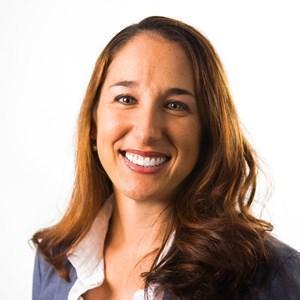
All the best,
Bethany Miller
Sr. Director of Athletics
Letter from the Faculty Athletics
Representative
Dear Biola Student-Athlete,
On behalf of the Biola University faculty, I want to welcome
you to Biola University Athletics! The mission of Biola University
is biblically centered education, scholarship and service —
equipping men and women in mind and character to impact the world
for the Lord Jesus Christ. 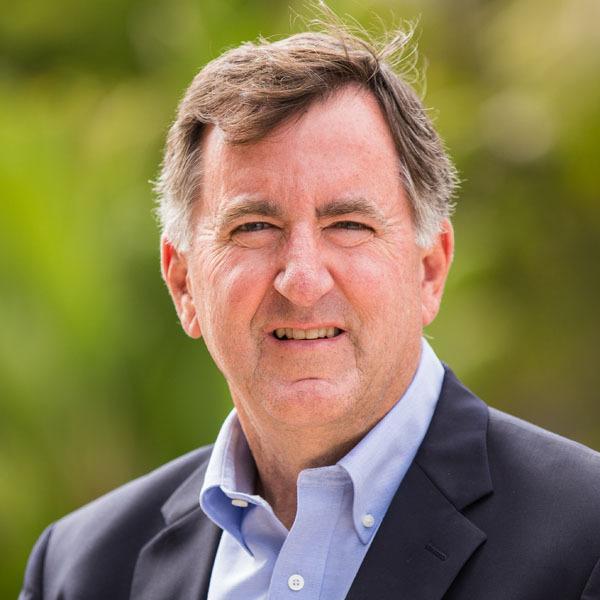
During your time at Biola University, I want to encourage you
to use the abilities and talents the Lord has given you to excel
both in the classroom and in athletic competition. In fact, our
goal is to help you be successful in both areas. This will not
always be easy. At times, it will be hard work. It may be
challenging, even frustrating, but it will be rewarding. If you
take some risks and get out of your comfort zone, you will grow
and reach your full potential in Christ.
You have been given the opportunity to learn from some of the
best faculty in the world. You are at a university where you can
rest assured that those who coach you and those who teach you are
concerned about your whole being: spiritually, emotionally,
physically, athletically and academically. Biola’s faculty is
committed to help you thrive during your college career and
flourish in whatever career you choose to pursue after graduation
by developing the soft skills and character required for continued
success after Biola.
All of us at Biola want you to grow in Christ more than
anything else. This will require you to keep your life in
perspective. Paul encouraged the church in Corinth with these
words, 'For you have been bought with a price: therefore glorify
God in your body' (1 Corinthians 6:20).
What is a Faculty Athletics Representative/FAR? It is a
designated faculty member committed to the Division II Life in the
Balance positioning statement and to the six Division II
attributes: Learning, sportsmanship, service, resourcefulness,
passion and balance. The FAR provides oversight in both academics
and athletics to ensure integrity and institutional control of the
athletics program.
The FAR also serves as an advocate for the student-athletes to
assist in ensuring the student-athletes' well-being, mental
health, and a quality experience in an environment of tolerance,
respect, and inclusion. Further, the FAR plays an active role in
communicating the vision and values of Division II intercollegiate
athletics at the campus, conference and national levels, and with
the community at-large.
Finally, I want to encourage you to make the most of your
opportunity to compete in college athletics. You are part of a
select few that has this privilege beyond high school. Do not take
this opportunity for granted and do not have any regrets when you
are done. Be the best possible teammate from day one. Do not wish
you would have worked harder in practice when the season is over.
Give it everything you’ve got, play for the Audience of One and
you will make some beautiful memories here.
All the best and I look forward to watching you compete. Go
Eagles!
Jeff McHugh
Associate Professor, Crowell School of Business
Faculty Athletics Representative
Dear Student-Athlete,
Welcome to Biola University! I am happy you have committed to
representing the Biola community through your athletic gifts. I am
confident your presence will greatly enrich our campus.
Biola University’s vision is to be “a community abiding in
truth, abounding with grace and compelled by Christ’s love to be a
relevant and redemptive voice in a changing world.” As a
student-athlete you will have an important role to play in this
ambition. Not only will you be an ambassador and representative of
Biola University, but you will be an ambassador for Christ both on
and off the field.
Biola University is a community that cares about the holistic
growth of our students, in every dimension of their development.
At Biola your coaches, professors, staff members and fellow
students are here to help you as you grow in all of these areas. I
encourage you to take advantage of all of the resources Biola has
for you on your academic and spiritual journey. 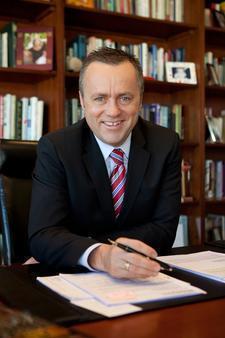
Student-athletes are regarded as leaders on our campus and with
that comes the responsibility of maintaining Christ-centered
conduct. As a student-athlete you have the opportunity and
privilege to be a role model for your fellow students and the
wider community. This handbook has been created as a resource for
you as you live, study and compete with Christ-centered
integrity.
May the Lord bless you as you pursue excellence in your sport
and in your studies.
Barry H. Corey
President
National Affiliation
NCAA Division II
As of September 2019, Biola University is a full member of the
NCAA Division II. Prior to that, Biola competed for many decades
in the NAIA and also the NCCAA.
About NCAA Division
II
NCAA Division II is a collection of over 300 NCAA colleges and
universities that provide thousands of student-athletes with the
opportunity to compete at a high level of scholarship athletics
while excelling in the classroom and fully engaging in the broader
campus experience. This balance, in which student-athletes are
recognized for their academic success, athletics contributions and
campus/community engagement, is at the heart of the Division II
“Life in the Balance” philosophy.
NCAA Mission
To govern competition in a fair, safe, equitable and
sportsmanlike manner, and to integrate intercollegiate athletics
into higher education so that the educational experience of the
student-athlete is paramount.
Division II
Positioning Statement
Division II supports the educational mission of college
athletics by fostering a balanced and inclusive approach in which
student-athletes learn and develop through their desired academic
pursuits, in civic engagement with their communities and in
athletics competition. The Division II experience not only
provides student-athletes the opportunity to earn scholarships
based on their academic, athletic and leadership abilities, but it
also offers the best championships-participant ratio among the
NCAA’s three divisions, and it prioritizes preparation for life
beyond graduation. Division II gives student-athletes the unique
opportunity to compete in the classroom, on the field, in their
career, for their causes, and on their terms.
Division II
Attributes
Learning: Multiple opportunities to broaden knowledge and
skills
Balance: Emphasis on collective knowledge; integration of
skills
Resourcefulness: Versatile skill set drawn from a broad
range of experiences
Service: Positive societal attitude through contributions
to community
Passion: Enthusiastic dedication and desire in
effort
Sportsmanship: Respect for fairness, courtesy; ethical
conduct towards others
Conference Affiliation
Pacific West (PacWest)
Conference
During its transition from the NAIA to the NCAA, Biola began
competing in the PacWest Conference during the 2017–18 season.
PacWest members include Academy of Art University (San
Francisco, Calif.), Azusa Pacific University (Azusa, Calif.),
Chaminade University (Honolulu, Hawaii), Concordia University
Irvine (Irvine, Calif.), Dominican University of California (San
Rafael, Calif.), Fresno Pacific University (Fresno, Calif.),
University of Hawaii Hilo (Hilo, Hawaii), Hawai’i Pacific
University (Honolulu, Hawaii), Point Loma Nazarene University (San
Diego, Calif.) and Westmont College (Santa Barbara, Calif.). Menlo
College (Atherton, Calif.), Vanguard University (Costa Mesa,
Calif.) and Jessup University (Rocklin, Calif.) will join the
conference in 2024-25.
Pacific Collegiate Swim and Dive Conference
(PCSC)
The Pacific Collegiate Swim and Dive Conference includes
institutions from the NAIA and the NCAA. All three divisions of
the NCAA — Division I, II and III — are represented among the 15
schools that make up the conference.
These diverse institutions gather to pursue common goals while
striving to qualify for their specific national championships. It
is the intention of the members to provide a conference that will
pursue the goals of intercollegiate competition. This is
accomplished by the use of a good facility, featuring a safe and
fair environment, and fostering an atmosphere of camaraderie and
good sportsmanship.
Western Water Polo Association (WWPA)
Located within the heart of the hotbed of college water polo,
the Western Water Polo Association continues to grow as a men's
and women's water polo conference competing at the NCAA level. The
league began sending teams to the National Collegiate Water Polo
Championships in 1981 on the men's side and in 2001 on the women's
side when the NCAA added the sport to its long list of
championships. The current structure of the WWPA includes eight
teams on the women's side and seven on the men's side.
The WWPA membership includes: Concordia Irvine, Fresno Pacific,
CSU East Bay (Hayward, Calif.), CSU Monterey Bay, Salem (Salem,
W.V.), Mercyhurst (Erie, Penn.), McKendree (Lebanon, Ill.) and
Gannon (Erie, Penn.).
Biola Athletics Staff
Directory
| Name |
Title |
Email |
|
| Administration/Support Staff |
| Dr. Bethany Miller |
Associate Vice President for Student Development/Senior
Director of Athletics |
bethany.miller@biola.edu |
|
| Eddie Shepard |
Senior Associate Athletic Director for Internal
Operations |
edmond.e.shepard@biola.edu |
|
| Neil Morgan |
Associate Athletic Director for Compliance &
Communications |
neil.morgan@biola.edu |
|
| Katie Simonson |
Director of Athletics Development |
katie.simonson@biola.edu |
|
| Billi Derleth |
Sports Information Director |
billi.derleth@biola.edu |
|
| Aaron Rollins |
Assistant Sports Information Director |
aaron.rollins@biola.edu |
|
| Lily Wright |
Media & Content Manager |
lily.wright@biola.edu |
|
| Nathan Cook |
Administrator for Facilities and Events |
nathanael.d.cook@biola.edu |
|
| Christina Dekker |
Executive Assistant to the Senior Director of Athletics |
christina.dekker@biola.edu |
|
| Annie Ricafranca |
Athletics Business Manager |
annie.h.ricafranca@biola.edu |
|
| Fabiano Lee |
Laundry Attendant |
fabiano.lee@biola.edu |
|
| Jeff McHugh |
NCAA Faculty Athletics Representative |
jeff.mchugh@biola.edu |
|
| Sports Medicine |
| John Wiese |
Director of Sports Medicine |
john.wiese@biola.edu |
|
| Linda Ruggles |
Associate Athletic Trainer |
linda.ruggles@biola.edu |
|
| Elle Baca |
Athletic Trainer |
elle.baca@biola.edu |
|
| Kayla Yanke |
Athletic Trainer |
kayla.yanke@biola.edu |
|
| Abner Rodriguez |
Athletic Trainer |
abner.rodriguez@biola.edu |
|
| Kenton Tom |
Athletic Trainer |
kenton.tom@biola.edu |
|
| David Kruse, MD |
Team Physician |
|
|
| Sport Performance |
| Matt Larsen |
Director of Sport Performance |
matt.larsen@biola.edu |
|
| Dr. Shawn Wayland |
Assistant Strength & Conditioning Coach |
shawn.wayland@biola.edu |
|
| Tristan Cazel |
Assistant Strength & Conditioning Coach |
tristan.cazel@biola.edu |
|
| Baseball |
| Jesse Rodgers |
Head Baseball Coach |
jesse.rodgers@biola.edu |
|
| Zachary Thomas |
Lead Assistant Baseball Coach |
zachary.thomas@biola.edu |
|
| Joshua Frye |
Pitching Coach |
joshua.frye@biola.edu |
|
| Men’s Basketball |
| Dr. Dave Holmquist |
Head Men’s Basketball Coach |
dave.holmquist@biola.edu |
|
| Matt Okada |
Assistant Men’s Basketball Coach |
matt.okada@biola.edu |
|
| Colton Meo |
Volunteer Assistant Men’s Basketball Coach |
colton.meo@biola.edu |
|
| Women’s Basketball |
| Mike Simonson |
Head Women’s Basketball Coach |
mike.simonson@biola.edu |
|
| Maya Duchesne |
Assistant Women’s Basketball Coach |
maya.duchesne@biola.edu |
|
| Sydney Burns |
Assistant Women’s Basketball Coach |
sydney.burns@biola.edu |
|
| Cross Country / Track &
Field |
| Sean Henning |
Director of Cross Country and Track and Field |
sean.henning@biola.edu |
|
| Branden Cruz |
Assistant Track & Field/XC Coach |
branden.cruz@biola.edu |
|
| Nadya Wisham |
Assistant Track & Field Coach, Jumps |
nadya.wisham@biola.edu |
|
| Robert Hernandez |
Assistant Track & Field Coach |
robert.hernandez@biola.edu |
|
| Jennifer Martinez |
Volunteer Assistant Track & Field/XC Coach |
jen.martinez@biola.edu |
|
| Rebeka Preston |
Volunteer Assistant Track & Field/XC Coach |
rebeka.preston@biola.edu |
|
| Men’s Soccer |
| Malik Shaheed |
Head Men’s Soccer Coach |
malik.shaheed@biola.edu |
|
| Carlos Aparicio |
Assistant Men’s Soccer Coach |
carlos.c.aparicio@biola.edu |
|
| Dylan Memory |
Assistant Men’s Soccer Coach |
dylan.memory@biola.edu |
|
| David Enciso |
Assistant Men’s Soccer Coach |
luis.david.enciso@biola.edu |
|
| Tomislav Jozinovic |
Lead Assistant Men’s Soccer Coach |
|
|
| Bryan Price |
Goalkeeper Coach (men’s and women’s soccer) |
bryan.l.price@biola.edu |
|
| Women’s Soccer |
| Brett Croft |
Head Women’s Soccer Coach |
brett.croft@biola.edu |
|
| Guilherme Mitrovitch |
Lead Assistant Women’s Soccer Coach |
guilherme.mitrovitch@biola.edu |
|
| Melanie Daly |
Assistant Women’s Soccer Coach |
melanie.daly@biola.edu |
|
| Paul Gizzi |
Goalkeeper Coach |
paul.gizzi@biola.edu |
|
| Softball |
| Kristin Halte |
Head Softball Coach/Senior Woman Administrator |
busoftball@biola.edu |
|
| Alexis Soto |
Assistant Softball Coach |
alexis.soto@biola.edu |
|
| Swimming & Diving |
| Nate Harding |
Head Swim & Dive Coach |
nathan.harding@biola.edu |
|
| Elizabeth Mackay |
Head Diving Coach |
elizabeth.mackay@biola.edu |
|
| Leah Thomas |
Lead Assistant Coach |
leah.thomas@biola.edu |
|
| Daniel Parahnevich |
Assistant Swim & Dive Coach |
daniel.parahnevich@biola.edu |
|
| Eric Lesser |
Assistant Diving Coach |
eric.lesser@biola.edu |
|
| Jacob Haaksma |
Assistant Swim & Dive Coach |
jacob.haaksma@biola.edu |
|
| Joneese Knight |
Assistant Swim Coach, Administration |
joneese.knight@biola.edu |
|
| Tennis |
| David Goodman |
Head Men’s & Women’s Tennis Coach |
david.t.goodman@biola.edu |
|
| Erik Martinez |
Lead Assistant Tennis Coach |
|
|
| Gordon Hong |
Assistant Tennis Coach |
gordon.hong@biola.edu |
|
| Volleyball |
| Brian Failinger |
Head Volleyball Coach |
brian.failinger@biola.edu |
|
| Meredith Fisher |
Assistant Volleyball Coach |
meredith.fisher@biola.edu |
|
| Dan Neumann |
Volunteer Assistant Volleyball Coach |
daniel.neumann@biola.edu |
|
| Water Polo (Men’s and
Women’s) |
| Jens Cole |
Director of Water Polo |
jens.cole@biola.edu |
|
| Trevor Campbell |
Senior Lead Assistant Water Polo Coach |
trevor.campbell@biola.edu |
|
| Matthew Rodriguez |
Senior Lead Assistant Water Polo Coach |
matthew.rodriguez@biola.edu |
|
| Samantha Rainey |
Goalkeeper Coach |
samantha.rainey@biola.edu |
|
| Shyanne Rainey |
Volunteer Assistant Men’s Water Polo Coach |
shyanne.rainey@biola.edu |
|
Key
Administrative Roles and Responsibilities
Senior Director of Athletics: Dr. Bethany Miller
The senior director of athletics is the chief officer for Biola
University’s intercollegiate athletics program. The director is
responsible for setting the vision and philosophy of the program,
with great attention given to the care, support and eligibility of
student-athletes, budget oversight, national association rules
compliance, game management, facilities management and
marketing/promotion.
Senior Associate Athletic Director for Internal Operations:
Eddie Shepard
The senior associate athletic director for internal operations
has significant responsibilities related to supervision of
coaching staff, planning and execution of all athletics budgets,
transportation, academic support for student-athletes, hiring of
assistant coaches and student workers, and training new employees
in departmental and institutional procedures.
Associate Athletic Director for Compliance/Communication:
Neil Morgan
The associate athletic director for compliance and
communication performs functions associated with directing and
monitoring all NCAA and conference compliance issues associated
with the administration of the university's athletic programs. He
oversees the comprehensive rules education program for athletics
staff and student-athletes and monitors compliance for all aspects
of NCAA legislation. In addition, he provides oversight to the
sports information, facilities and event management efforts while
serving as staff advisor to the Student-Athlete Advisory
Committee.
Administrator for Facilities and Events: Nathan Cook
The administrator for facilities and events manages both the
long-term planning and the daily operations of the Fitness Center.
He oversees the control and care of athletic equipment and
uniforms. He serves as on-site administrator at all home
competitions and manages work orders across Biola’s athletic
facilities. Additionally, he provides lifeguard training and cpr,
first aid and AED certifications for the department.
Faculty Athletics Representative: Jeff McHugh
The FAR is Jeff McHugh from Crowell School of Business. The FAR
is a member of the faculty at an NCAA member institution,
appointed by the president to serve as a liaison between the
institution and the athletic department, and also as a
representative of the institution in conference and NCAA affairs.
The FAR is responsible for ensuring the academic integrity of the
athletics program as well as providing institutional oversight for
the athletics program. The FAR works with Biola to ensure the
wellbeing of student-athletes and the availability of academic
services. The FAR reports directly to the president.
Student-Athlete
Advisory Committee
The Student-Athlete Advisory Committee is made up of
student-athletes who represent all varsity athletic programs. The
group is assembled to provide insight into the student-athlete
experience and offer input on rules, regulations and policies that
affect student-athletes’ lives on campus.
Furthermore, members have the opportunity to offer input on
issues that may be national in scope. SAAC can facilitate better
communication among student-athletes from all of the athletic
teams to address issues common to all.
SAAC may also serve as a conduit of communication between
student-athletes, coaches and athletic administrators regarding
ways to improve the student-athlete experience and promote growth
and education through athletic participation. Concerns can be
voiced and solutions offered regarding any issue that may be
relevant to Biola’s student-athletes. SAAC also serves as a center
for connecting with the student body and the external community
through community engagement.
SAAC Constitution and
Bylaws
Mission Statement
The mission of SAAC is to enhance the total student-athlete
experience by promoting opportunity, protecting student-athlete
welfare and fostering a positive student-athlete image while
promoting the development of Christian character and supporting
the pursuit of team and individual academic achievement.
Purpose
The purpose of SAAC shall be to provide administration with
insight into the student-athlete experience and to offer input on
rules, regulations and policies that affect student-athletes’
lives. It shall promote the opportunity for the exchange of ideas
among student-athletes from different sports. The committee is
also assembled to help members further develop leadership
skills.
SAAC is responsible for fostering community engagement for
Biola Athletics throughout the year. Student-athletes should
strive to be role models for the Biola community and larger local
community as a whole.
Members are responsible for assisting teammates in learning,
understanding and adhering to all NCAA Division II rules.
Philosophy
SAAC places a high priority on the overall quality of the
educational experience and on the successful completion of all
students’ academic programs. We seek to establish and maintain an
environment in which student-athletes’ athletic activities are
conducted as an integral part of the student-athletes’ educational
experience and journey to spiritual growth. We also seek to
establish and maintain an environment that values diversity among
our student-athletes and athletic staff members, while giving
glory to God in all we do.
Membership
The officers and members of this organization must meet the
following requirements:
All members are subject to removal by the SAAC Executive
Committee and/or the SAAC advisor(s) should the SAAC member fail
to maintain the above requirements.
Teams on SAAC
Varsity sports teams are members of SAAC. A varsity sport is
one that has been accorded that status by the university president
and Board of Trustees. One vote is given to the following varsity
sports teams: baseball, men’s basketball, women’s basketball,
men’s cross country, women’s cross country, men’s soccer, women’s
soccer, softball, men’s swimming & diving, women’s swimming
& diving, men’s tennis, women’s tennis, men’s track &
field, women’s track & field, men’s water polo, women’s water
polo and volleyball. Any additional varsity sport that is created
will be allowed voting member status once it begins its first
academic year with intercollegiate competition.
Selection Process
Each athletic team is responsible to select two representatives
for SAAC. These representatives shall be selected, and their names
should be sent to the president of SAAC and the advisor(s) prior
to the start of the academic year. If special circumstances arise,
additional members from a team may be chosen. All SAAC members
hold their position for a full school year and may serve multiple
terms.
No first-year student (or first-year student-athlete) will be
allowed to serve on SAAC Executive Committee.
Meetings and Attendance
SAAC will generally meet once a month when school is in
session. Special meetings may be called when a need arises.
Members are notified of the meeting schedule as well as any
changes via email and Teamworks notifications.
Attendance at all meetings and organization events is required.
Every program must have at minimum one representative at each
meeting. Each member is allowed only one unexcused absence. SAAC
members who have a schedule conflict with the meeting or event
should submit a written excuse to the President of SAAC and the
advisor(s) of SAAC at least 24 hours before the scheduled start
time of the meeting or event. In the event of an emergency, SAAC
may grant an exemption to this rule. An alternate member from the
SAAC member’s team should attend the meeting in place of the
member who will be absent. Unexcused absences that result in zero
representation for a varsity team at a meeting/event shall result
in a fine imposed on the team’s operating budget.
The Executive Committee will also meet separately in addition
to the monthly SAAC meetings. Executive Committee meetings are
called by the president and/or SAAC advisor(s).
SAAC Member Responsibilities
The responsibilities of SAAC Members are outlined below:
Communicate all relevant matters discussed in SAAC
committee meetings with coaches and teams, including:
Discuss and recommend positions on university issues that
affect student-athletes.
Explain and discuss proposed and passed current national
affiliation and NCAA Division II legislation, when
applicable.
Participate in activities with official charitable
organizations (e.g., Team Impact, Make-A-Wish Foundation, Special
Olympics, etc.).
Participate in activities sponsored by SAAC.
Assist the athletic administration, coaches and
student-athletes in promoting excellence within the current
conference competition and future competition in the PacWest
Conference by promoting sportsmanship.
Participate in any fundraising activities for
SAAC.
Executive Committee
The SAAC Executive Committee consists of the president, vice
president, secretary, director of marketing/social media, director
of spiritual engagement and any at-large assignments at the
discretion of the advisor(s). It is a committee made up of
student-athletes assembled from the SAAC representatives. A
first-year student-athlete cannot serve on the executive
committee.
No single varsity team will occupy all positions of the
Executive Committee.
Executive Committee Responsibilities
Establish committees at the beginning of the year that
coincide with the objectives and goals the Executive Committee
deems appropriate.
Attend all meetings unless the president is informed of a
valid excuse at least one week before the scheduled meeting. An
alternate from his or her team must be selected to take the
Executive Committee member’s place.
Review and discuss new and upcoming PacWest Conference and
NCAA regulations, when applicable.
Oversee SAAC community engagement efforts (internal and
external).
Provide input for topics to be included at any all
student-athlete meetings.
Executive Committee Elections
Elections will be held every April for the following academic
year. All SAAC Executive Committee members will hold their
positions for one year.
Executive Committee Positions
President
The president is voted on by the committee. A two-thirds
majority must be given to one nominee. In the event that a
two-thirds majority is not reached, a new election would take
place with the two nominees who received the most votes. The
remaining candidate that receives at least 50 percent plus one
vote will be the new president.
In the event the president cannot fulfill their obligations,
he/she must submit a letter of resignation. At that time, the vice
president would take over for the remainder of the year. The
election of the vice president position will take place a week
after the vice president has assumed the office of the president.
The vice president would be able to serve an additional year as
president after the interim year (if re-elected). The following
are the responsibilities of the president:
Call and preside over all SAAC meetings.
Serve as liaison to the university athletics
department.
Support and maintain the mission and philosophies of all
committees.
Create new committees if necessary and facilitate the
communication of ideas between existing committees.
Other duties as designated by the advisor(s).
Vice-President
The vice president shall be voted into office at the first
meeting in April. Each member of SAAC votes in the vice president
election. A two-thirds majority must be given to one nominee. In
the event that a two-thirds majority is not reached, a new
election would take place with the two nominees who received the
most votes. The remaining candidate that receives at least 50
percent plus one vote will be the new vice president. The
following are the responsibilities of the vice president:
In the president’s absence, assume all
responsibility.
Oversee subcommittees that may be formed in response to the
needs of the student-athletes.
Inform the President of any proposals by SAAC
committees.
Other duties as designated by the advisor(s).
Secretary
The secretary shall be voted into office at the first meeting
in April. A two-thirds majority must be given to one nominee. In
the event that a two-thirds majority is not reached, a new
election would take place with the two nominees who received the
most votes. The remaining candidate that receives at least 50
percent plus one vote will be the new secretary. The following are
the responsibilities of the secretary:
Responsible for all meeting minutes, agendas, attendance.
Apprise the athletic communications staff of any community
engagement activities.
Communicate all relevant information to SAAC
members.
Send SAAC minutes to coaches, athletic staff and the
faculty athletics representative.
Other duties as designated by the advisor(s).
Director of Marketing & Social Media
The Director of Marketing & Social Media shall be voted
into office at the first meeting in April. A two-thirds majority
must be given to one nominee. In the event that a two-thirds
majority is not reached, a new election would take place with the
two nominees who received the most votes. The remaining candidate
that receives at least 50 percent plus one vote will be the new
marketing liaison. The following are the responsibilities of the
Director of Marketing & Social Media:
Must work with the athletic communication staff to
publicize and market athletic events and activities and
SAAC-sponsored activities.
Will prepare marketing material and publicize community
engagement events.
Will help publicize, organize, and coordinate fundraising
efforts within SAAC.
Will manage ongoing social media for SAAC.
Other duties as designated by the advisor(s).
Director of Spiritual Engagement
The director of spiritual engagement shall be voted into office
at the first meeting in April. A two-thirds majority must be given
to one nominee. In the event that a two-thirds majority is not
reached, a new election would take place with the two nominees who
received the most votes. The remaining candidate that receives at
least 50 percent plus one vote will be the new director of
spiritual engagement. The following are the responsibilities of
the director of spiritual engagement:
Organize and establish Biola Athletics department
chapels.
Partner with leadership of any student-athlete spiritual
development group (FCA, Huddle, etc.) to support that group’s
operation and impact within the department.
Other duties as designated by the advisor(s).
Student-Athlete
Advisory Committee Membership
The following are the 2026-27 student-athlete representatives
listed by team.
Baseball: John Iacono, Ransom Lorenzen
M. Basketball: Gannon Dykstra, Logan Stewart
W. Basketball: Laney Grider, Jaycee Goldsmith
M. Cross Country: Aiden Burr, Grant Miller
W. Cross Country: Jaina Kang, Miranda Zakhar
M. Soccer: Ethan Caudle, Ryan Ellsworth
W. Soccer: Hailey Allen, Riley Brumfield, Isa Magee
Softball: Jackie Ibarra (president), Lily Rodriguez
(spiritual engagement), Maddie Roth (executive committee), Lizzie
Byer, Madison Duncan, Natalie Kim, Alexa Sheard
M. Swim & Dive: Henry Bokma
W. Swim & Dive: Allison Yancey (secretary), Kylie
Montiel
M. Tennis: Thiago Canessa, Carter Magistad
W. Tennis: Dafne Andres
M. Track & Field: Malachi Christensen (spiritual
engagement), Marco Smith (spiritual engagement)
W. Track & Field: Keeley Chard (executive
committee), Norah DeYoung
Volleyball: Beth Bellfi (social media), Grace Rice
(social media), Sophia Knevelbaard, Emily Page
Men’s Water Polo: Cole Brown, Ivan Tkach
Women’s Water Polo: Marissa Brock (vice president),
Clara McKee, Savannah Rapp
The associate athletic director for compliance/communication,
Neil Morgan, is currently a co-advisor to SAAC. Billi Derleth,
Sports Information Director, is the other co-advisor.
As a Biola University student-athlete, the university community
is here to serve you and help ensure your well-being and academic
success. Each academic and staff department, office and service
area aims to provide you with the resources and information
necessary to support you at various stages throughout your Biola
academic and athletic career.
Student Health Center
All enrolled students, regardless of insurance status, are
eligible for Health Center services. Services include
M.D. appointments, nurse practitioner appointments, nurse
appointments, immunizations, free self-care products, health
education, travel related services and health care and health
education pamphlets.
Campus Safety
The Campus Safety department's main responsibility is to
provide for the safety and protection of our students, staff and
visitors. They are the primary law enforcement agency on campus
and their officers have full police officer powers of arrest while
on duty.
There are Campus Safety officers who are armed with firearms
while on duty. All officers are equipped with tasers, OC spray and
batons. In addition to state-mandated training courses, officers
have 10 in-service trainings per year that cover emergency
preparedness, physical skills and customer service. Armed officers
receive firearms training no less than four times per year, as
well as biannual active shooter response training.
Campus Safety is divided into three internal divisions: Field
Operations, Communications and Emergency Operations, and
Administrative Operations. The Field division is managed by an
overseeing captain and consists of officers, corporals, sergeants,
a lieutenant and an investigator. The Field division is augmented
by student cadets who assist with student escorts, building
unlocks, traffic direction and parking enforcement, and gate
attendants who staff the gate houses to provide visitor parking
permits, give visitor information and control access to campus at
night.
The Communications and Emergency Operations division handles
the radio dispatch center, serves as university operator, is
responsible for sending emergency text and email notifications via
the university's emergency notification system, and monitors a
system of campus security cameras (which cover parking lots,
residence hall entrances and other key areas of the university).
The Communications and Emergency Operations division is directed
by the university's emergency operations manager.
The Administrative Operations division handles campus parking
management, parking permits for staff and students, citation
appeals, bicycle permits and the coordination of access requests
to campus buildings. For questions regarding parking enforcement,
permits or other special needs on campus, contact the Campus
Safety office at campus.safety@biola.edu. The Administrative
division is managed by the Campus Safety public information
officer.
Biola Counseling Center
BCC provides marital and premarital counseling as well as
psychotherapy for individuals, couples and families. Psychological
testing and evaluation are also provided. If the need arises, the
center also provides psychotherapy and psycho-education groups
that afford opportunities for interpersonal learning, acquisition
of information and the normalization of emotional struggles
through mutual sharing.
The majority of BCC therapists are associated with Biola’s
Rosemead School of Psychology as clinical faculty, post-doctoral
students, or doctoral students who are supervised by licensed
clinical psychologists. Counselors seek to help clients arrive at
a rich understanding of their personal life story so that, through
increased self-understanding, the individual becomes better
equipped to navigate and cope with the challenges of daily living.
Some of the most common issues encountered by clientele include
depression, anxiety, loneliness, low self-esteem and difficulties
with establishing and maintaining relationships. BCC therapists
are equipped to help clients address these difficulties through
the enhancement of emotion management, appropriate interpersonal
boundaries, self-awareness and interpersonal and situational
problem solving skills.
In order to receive further information or to make an
appointment, contact the La Mirada office at (562) 903-4800.
Special reduced rates are available for Biola University
students.
Spiritual Direction
Spiritual direction involves meeting with another Christian to
give prayerful attention to the personal relationship with God. In
spiritual direction, an individual will receive help discerning
how God is speaking, how to respond to him, and how to live out a
relationship with him. Biola undergraduate students can receive
spiritual direction for free at the Institute for Spiritual
Formation (ISF).
How to sign up for
spiritual direction
Go to the Institute for Spiritual Formation website and follow
the instructions for setting up spiritual direction: https://www.biola.edu/talbot/academics/isf/spiritual-direction
How to get
credit for spiritual direction
Undergraduate students who come to spiritual direction are
eligible to receive 1 chapel credit per meeting (unless they are
coming for a class requirement). Chapel credit forms are available
at the ISF front desk or at the Chapel Accountability office.
Office of Student
Accessibility
The Office of
Student Accessibility (OSA) exists to provide students with
academic assistance and support through a range of services.
Tutoring and academic mentors are available, as are individualized
ADA care plans and guidance for those diagnosed with medical,
psychological, learning or physical conditions. When entering the
center, whether in person or remotely, students can expect to be
met by caring, professional staff who work hard to provide safe,
personalized advocacy in a confidential and welcoming
environment.
OSA is located in Rose Hall 134, facing Talbot East. Walk-in
hours are available and appointments are strongly encouraged.
Phone: (562) 906-4542
Writing Center
Biola's Writing
Center supports students, faculty and staff in their writing.
A team of peer consultants provides help with any writing
assignment, research report, graduate thesis, conference
presentation or conversational English. The center provides
feedback for writing projects at any stage, from outlines and
early drafts to revisions and final edits, in a friendly,
supportive environment, both face-to-face and online. The center
strives to develop strong writers, rather than just strong
writing, supporting writers in their work while letting them
maintain control and ownership over their writing. The center is
open to all Biola students, both undergraduate and graduate.
Students can create an account and make an appointment using the
online scheduler.
The Writing Center is located on the middle level of the
library. Assistance is provided on a walk-in basis or by
appointment. Phone: (562) 903-4826
Sexual Assault and
Prevention
It is the policy of Biola University to maintain the university
environment as a Christian community that provides a place for
spiritual growth, work, and study free of all forms of sexual
intimidation and exploitation. All students, staff, and faculty
should be aware that the university is prepared to take action to
prevent such intimidation and exploitation and that individuals
who engage in such behavior are subject to discipline. Sexual
violence is a criminal act that violates the standards of our
community and is unacceptable at the university. Sexual violence
can be devastating to the person who experiences it directly and
can be traumatic to the person’s family, friends, and larger
community as well. If you feel like you have been the victim of
sexual violence or sexual assault, please visit https://www.biola.edu/campus-safety/sexual-assault
for information about sexual assault and to see how you can report
a sexual assault or sexual violence.
The NCAA Board of Governors Policy on Campus Sexual Violence
requires all NCAA institutions to take reasonable steps to confirm
whether incoming, continuing and transfer student-athletes have
been disciplined through a Title IX proceeding or criminally
convicted of sexual, interpersonal or other acts of violence.
Annually, Biola University will have all student-athletes
submit a self-disclosure related to their conduct that resulted in
discipline through a Title IX proceeding or in a criminal
conviction for sexual, interpersonal or other acts of
violence.
Additionally, each year the associate athletic director for
compliance/communication will, in conjunction with the campus
Title IX office, make a reasonable effort to ask each former
institution the same three questions: whether the student left the
institution with an incomplete Title IX proceeding, was
disciplined through a Title IX proceeding, or has a criminal
conviction for sexual, interpersonal or other acts of violence.
These requests are sent and tracked in TRACE, which records which
institutions were asked, when, and what came back. Anything
disclosed is referred to the Title IX Office.
As part of this process, each Biola student-athlete signs a
FERPA release granting Biola’s administration permission to
receive and review any related information. The release is
collected in TRACE when the student-athlete signs with Biola,
rather than after arrival on campus, and travels with each request
to a former institution. The annual self-disclosure remains housed
in Teamworks Compliance & Recruiting.
Family
Educational Rights and Privacy Act
In 1974 Congress passed the Family Educational Rights and
Privacy Act, otherwise known as FERPA (20 U.S.C. § 1232g; 34 CFR
Part 99), a Federal law designed to protect the privacy of student
education records. According to the Department of Education, this
law applies to educational agencies and institutions that receive
funding under any program administered by the U. S. Department of
Education.
The American Association of College Registrars and Admissions
Officers define FERPA as:
A Federal law designed to protect the privacy of educational
records, to establish the right of students to inspect and review
their education records, and to provide guidelines for the
correction of inaccurate and misleading data through informal and
formal hearings.
FERPA allows institutions to release information from a
student's record without the written consent of the student to
school officials who have "legitimate educational interest" and
who need access to the information to fulfill their professional
responsibility. A school official is a person employed by the
University in an administrative, supervisory, academic, research
or support staff position, including law enforcement unit
personnel and health staff.
More information about FERPA can be found here: https://www.biola.edu/registrar/ferpa
Athletics Mission
Statement
Biola Athletics exists to recruit and educate a diverse group
of Christian student-athletes to reach their full potential
athletically, relationally, emotionally, spiritually and
academically — equipping them in mind and character to impact the
world for Christ. Macintosh HD:Users:edmonds:Desktop:Biola
Athletics.jpg
Core Values
Biola Athletics is built on three core values.
Faith. We are rooted in Christ, anchored in
Scripture, and grounded in faith. We have the freedom to compete
with joy and passion as an expression of our love for God and each
other. Our faith isn’t performed - it’s lived. Every practice,
every game, every handshake with an opponent is a chance to embody
God’s love and bring Him glory.
Formation. We flourish in mind, body, and
spirit, growing individually and as a community. Our coaches don’t
just build athletes; they build people who will lead, serve, and
shine long after the final practice. We shape a community of
kindness on our teams, with our campus, in our world. Not only for
today - we build bonds that outlast seasons. When you wear Biola
across your chest, you have a team with you. Not only on the field
of competition, but for life. We travel, play, and pray together,
heart to heart - with firm convictions and as a light to the
world.
Fierce. We compete and live with passion.
Every rep. Every sprint. Every day. We honor our gifts by using
them fully - reflecting the image of God. We play with intensity
and gritty dedication. We are wholehearted, tenacious, and
relentless. We rise up on wings like eagles and fly. Above and
beyond. Courageous in all we do.
Faith You Can See.
Statement of Philosophy
Biola University Athletics serves to recruit and educate a
diverse group of Christian student-athletes to compete in the NCAA
Division II. The institution supports its student-athletes in
reaching their full potential athletically, relationally,
emotionally, spiritually, and academically. We believe in the
holistic development of a student-athlete — living life in balance
— in order to thrive at Biola and beyond. The following are areas
of focus for holistic development, as well as the values shaping
the department and university.
Biola Athletics seeks to foster a balanced and inclusive
approach in which student-athletes learn and develop through their
chosen academic pursuits, civic engagement with their communities,
and athletic competition.
We are committed to the physical and educational well-being
of student-athletes, including maintaining an environment that
values cultural diversity and gender equity among student-athletes
and intercollegiate athletics department staff.
We are committed to ensuring that coaches and
administrators exhibit fairness, openness and honesty in their
relationships with student-athletes. We seek to empower and give
voice to the student-athletes via the Student-Athlete Advisory
Committee.
We believe a positive athletic environment and ethical
approach to sport, scholarship and service are important to
character development and the overall success of the
intercollegiate athletic experience. We value respect, fairness,
civility, honesty and responsibility. These values should be
manifest in the full spectrum of activities affecting the
athletics program.
In order to create an atmosphere of respect and civility,
we are committed to protecting individuals from unlawful
discrimination or harassment with respect to governance policies,
educational programs, activities, and employment
policies.
We recognize that our student-athletes are not simply
members of their team, but also members of the student body as a
whole as well as many other outside communities. We therefore
strive to protect the time of the student-athlete so they may be
fully immersed in outside communities and truly experience “life
in the balance.”
With the goal of being a model NCAA Division II
institution, Biola is strongly committed to the principle of rules
compliance. We are fully invested in complying with all applicable
Association rules. Partnerships with other PacWest Conference
institutions provide an important accountability in this
area.
Within the scope of the rules of compliance, the
institution is committed to maintaining the strictest governance
as it relates to recruiting, awarding financial aid, tracking
student-athlete eligibility and activity, meeting all sport
sponsorship requirements, and maintaining ethical accounting
practices.
In addition to the above guiding principles, Biola Athletics is
focused on the following fundamental philosophies that help define
and distinguish who we are:
Academics - As part of the Living Life in
The Balance initiative, Biola University is committed to
supporting the academic success of its student-athletes. Biola
provides a top-tier education for all students and is specifically
committed to providing the support necessary to ensure a path to
graduation that demonstrates graduation rates for student-athletes
that are at least equal to those of the general student
population.
Athletics - Biola University is committed
to providing highly competitive programs that aspire to compete
for NCAA Division II national championships. We believe the key to
accomplishing athletic success is through the quality Christian
leadership of coaches and strong administrative support, allowing
student-athletes to reach their collective team potential. In
addition, we offer top-level athletic facilities, equipment,
strength training, and athletic training support to help our
student-athletes realize their full potential. It is our goal to
see all student-athletes develop in their sport, so that they are
more skilled at the conclusion of their time at Biola than when
they began.
Spiritual Development - Biola University
is committed to providing an educational experience that
integrates Christian faith with every aspect of the university
experience. We believe the intercollegiate athletics experience
can play a significant role in the spiritual development of every
student-athlete, and we have developed our programs with spiritual
growth at the core. We believe athletics at Biola provides an
opportunity to invest in the development of the entire
student-athlete’s holistic development in mind, body and
soul.
Community Engagement - Biola Athletics is
committed to active engagement with our communities to enhance
relationships between our student-athletes and community members
and develop a shared civic experience in our student-athletes. We
believe this commitment goes beyond periodic service work; it
should be tied to an active and continuing engagement with our
surrounding communities, motivated by our Christian love for
others. We seek to not only engage the community off campus, but
also to provide opportunities to bring the community onto our
campus and engage them in a positive, family-friendly
manner.
Post-Graduation Success - Biola Athletics
is committed to developing our student-athletes’ character, rooted
in their Christian faith, so that they can successfully transition
to become productive members of society after they graduate. We
also believe in an athletic model that allows our student-athletes
to focus on academic pursuits, obtain internships for career
preparedness, and develop a strong spiritual foundation to thrive
holistically beyond graduation.
Student-Athlete Conduct
Biola
Student-Athlete Code of Conduct
We at Biola uphold integrity as a core value of our community.
Members are expected to demonstrate a commitment to the value of
integrity in word and deed and to take responsibility for their
own violations of behavioral guidelines.
We at Biola recognize that Scripture condemns sins of the
heart, such as covetousness, selfishness, ambition, envy, greed,
lust, and pride. By their very nature, these sins are more
difficult to discern, but because they lie at the heart of
relationships, they are of central concern to the Biola community.
We confess and repent of these sins as we become aware.
Furthermore, students at Biola commit to refrain from practices
that Scripture forbids, such as sexual relations outside of
marriage between a husband and wife, theft, and dishonesty.
Finally, for the purpose of character development and the
creation of a healthy, vibrant Christian community, students at
Biola commit to abstain from the use of tobacco products, the use
of alcoholic beverages, and the activity of gambling.
Biola students have chosen, freely and willingly, to abide by
these standards. We regard any violation of these standards to be
a breach of integrity, since each member has voluntarily chosen to
associate with the Biola community and to accept, uphold, and live
by these standards.
The university reserves the right to refuse or revoke
admittance and/or dismiss any person who does not conform either
to the stated guidelines and regulations governing student
conduct, or to the expressed principles, policies and expectations
of the university. The university also reserves the right to take
action against an individual for violating the standards
regardless of how much time has passed since the violation.
The university also reserves the right to take disciplinary
actions for violations of university standards by graduates
awaiting degrees and students who withdraw from school while a
disciplinary matter is pending.
The university reserves the right to review actions taken by
civil authorities regarding any student or student organization.
University disciplinary proceedings may be instituted against a
student charged with violation of a law and may, at the sole
discretion of the university, be carried out prior to,
concurrently, or following civil or criminal proceedings.
Violations occurring during non-enrolled periods may be considered
by the university in determining whether a student will be
eligible to continue his/her enrollment in the university and, if
so, under what conditions.
The Biola community standards apply to all students:
1. While enrolled in classes for the fall semester (including
Thanksgiving), spring semester (including spring break), and
summer term;
2. Who are representing the Biola community in any off-campus
events, such as mission trips, internships, study abroad, and
athletic or academic activities;
3. Who are not enrolled in classes but are living on campus and
not checked out of their room. The fact that these standards only
apply to students while they are enrolled or in residence in no
way indicates that the university believes that contrary behavior
is acceptable during non-enrolled periods. The university
recognizes that it is inherently the responsibility of the
individual to make such behavior decisions. The essential role of
individual judgment, discernment, and recognition of personal
accountability to God throughout the Biola community cannot be
overemphasized. Behaviors while not enrolled may affect a
student’s ability to re-enroll or continue at Biola
University.
Team Rules
The following are the expectations and rules for every program
in the Biola Athletic Department. Additionally, individual
programs may have supplemental rules directly related to their
sport, but every program will incorporate the following
policies:
Student-athletes will know and uphold all of the rules and
regulations in Biola’s Student Handbook, as well as the Code of
Conduct and the Student-Athlete Handbook.
Student-athletes will conduct themselves, at all times, in
a manner that reflects positively on Biola Athletics and our
Christian witness.
Student-athletes will attend all scheduled classes they are
registered for and will not miss class to attend
practice.
Student-athletes may miss class for competition and/or
travel only by completing the “Class Absence Form” with their
professors at the beginning of the
semester. It is the student-athlete’s responsibility
to ensure this process is completed correctly.
Student-athletes are expected to attend every scheduled
practice and are to communicate immediately with their head coach
should any issues such as illness or an emergency arise that would
prevent them from attending countable athletically related
activity.
Student-athletes will be appreciative and respectful
communicators with coaches, teammates, professors, administrators,
etc.
Student-athletes will respect game officials, game staff,
and opposing fans and will not use negative language or gestures
towards others.
Student-athletes will refrain from participation in other
contact sports or extreme activities that may result in injuries
that would hinder them from performing at their maximal level and
keep them from full participation in both training sessions and
match play.
Student-athletes will ensure that they actively monitor
their Biola email and promptly reply to any Teamworks Compliance
& Recruiting notifications or emails from their coaches,
instructors, or athletic administration.
Student-athletes will learn program requirements and commit
to maintain their academic eligibility with strong academic
performance each semester.
Student-athletes understand their commitment to their team
and commit to maintaining a high work ethic to develop the skills
of their sport. They will at all times put forth effort
commensurate with being a high-level collegiate athlete.
Failure to follow any team rule may result in disciplinary
action up to and including removal from the team and/or
reduction/nonrenewal of athletic financial aid.
Biola University's mission to impact the world aligns with one
of several NCAA Division II strategic priorities.
Student-athletes, coaches, and the athletics department staff are
involved in building relationships by bringing the community to
campus to experience Division II athletic events. Biola University
believes in the importance of community engagement and serving the
local community. Student-athletes will participate in community
engagement events each year that will build a bridge for Biola
University student-athletes to engage with the local community
both on and off the Biola campus.
Community engagement initiatives are integrated into gamedays,
championship events, and Student-Athlete Advisory Committee
meetings. This allows student-athletes to further develop skills
to serve others with compassion and courage while being equipped
as leaders. Through community engagement, student-athletes have
the opportunity to build relationships and impact those around
them for the glory of God.
NCAA Student-Athlete
Statement
Each year, each student-athlete must sign the Student-Athlete
Statement affirming compliance with a variety of rules and
activities. For Biola student-athletes, this is in early August,
prior to reporting to campus in the fall. The form is assigned to
all student-athletes in Teamworks Compliance & Recruiting. The
preface to the form provides information as to its meaning and
possible ramifications as follows:
NCAA Division II Bylaws 7.3.1.5.8 and 7.3.1.5.8.1 provide that,
before participation in intercollegiate competition each academic
year, a student-athlete shall sign a statement in a form
prescribed by the NCAA Division II Management Council in which the
student-athlete submits information related to academic and
athletics eligibility, recruitment, financial aid, previous
positive drug tests administered by any other athletics
organization and involvement in organized gambling activities
related to intercollegiate and professional athletics competition
under the Association's governing legislation. This is the annual
form prescribed by the Management Council and it includes the
following 10 parts:
I. General Statement Concerning Eligibility and
Athletics Participation;
II. Family Educational Rights and Privacy Act
(FERPA)/Health Insurance Portability and Accountability Act
(HIPAA) Consent;
III. Athletics Eligibility;
IV. Drug Tests;
V. Sports Wagering/Betting;
VI. Academic Eligibility Information (Freshman
Only);
VII. Other Violations;
VIII. Information Pertaining to Future
Transfer;
IX. Termination/Survivability of Student-Athlete
Statement; and
X. Student-Athlete Signature.
Bylaw 7.3.1.5.8.1 provides that a failure to complete and
sign the annual eligibility statement shall result in the
student-athlete's ineligibility for participation in all
intercollegiate competition. Accordingly, you must legibly
complete the information above and sign all parts below in order
to be eligible to participate in intercollegiate competition.
Before you sign this form, you should read the eligibility
provisions of the NCAA Division II Manual or the Summary of NCAA
Regulations, or another similar outline or summary of NCAA
regulations, in each case, in the form provided to you by your
director of athletics. You are responsible for knowing and
understanding the application of all NCAA Division II regulations
related to your eligibility. If you have any questions, you should
discuss them with your director of athletics.
The conditions that you must meet to be eligible and the
requirement that you sign this form are indicated in the following
articles and regulations of the Division II Manual: Bylaws 10
(ethical conduct), 13 (recruiting), 14 (eligibility: academic and
athletics requirements), 15 (financial aid), 16 (awards, benefits
and expenses for enrolled student-athletes) and 18.2 (eligibility
for championships).
If you have questions you may contact the NCAA directly at
317-917-6008.
PacWest
Principle of Sportsmanship and Ethical Conduct
It shall be the responsibility of each institution to ensure
that all individuals employed by or directly associated with the
athletic programs of that institution conduct themselves in a
sportsmanlike manner when representing their institution,
especially at intercollegiate athletic contests.
Unsportsmanlike and/or unethical conduct may subject an
individual to disciplinary action by the Commissioner and/or the
individual member institution(s) involved. The institution that
the offending individual is associated with may also be subject to
disciplinary action if it is found that the institution's
policies, action, or failure to act substantially contributed to
the individual's misconduct.
Acts of unsportsmanlike and/or unethical conduct may be
reviewed by the Commissioner and/or the individual member
institution(s) involved. Individual penalties and/or discipline
may be determined by the Commissioner and/or the individual member
institution(s) involved.
If the Commissioner is incapacitated or unable to fulfill
his/her duties, the Conference office staff member responsible for
Compliance duties shall continue Conference operations by
reviewing acts of unsportsmanlike and/or unethical conduct and
levy appropriate penalties in such cases until the Executive Board
has the opportunity to vote on an interim Commissioner.(Revised
5/25/23)
Acts of unsportsmanlike and/or unethical conduct may include,
but are not limited to, a student-- athlete, coach or other
institutional representative who:
Strikes or physically abuses an official, opposing coach or
player;
Intentionally incites participants or spectators to violent
or abusive action;
Uses obscene gestures or profane or unduly provocative
language or action toward officials, opponents, or
spectators;
Publicly criticizes any game official, Conference
personnel, another institution or its personnel;
Engages in negative recruiting by making statements to a
prospective student-athlete, his/her parents, high school coach,
or other persons interested in the prospective athlete which are
unduly derogatory of another member institution, its personnel, or
its athletic program or;
Any other acts or conduct not specifically described herein
that bring disrepute on the Conference or one of its member
institutions.
Hazing Policy
The law of California makes it a criminal offense for anyone to
participate in hazing. Biola policy is based upon the proposition
that students are entitled to be treated with consideration and
respect. Biola regulations on hazing are synonymous with state law
as stated below (Calif. Penal Code §245.6):
It shall be unlawful to engage in hazing, as defined in
this section.
“Hazing” means any method of initiation or preinitiation
into a student organization or student body, whether or not the
organization or body is officially recognized by an educational
institution, which is likely to cause serious bodily injury to any
former, current, or prospective student of any school, community
college, college, university, or other educational institution in
this state. The term “hazing” does not include customary athletic
events or school-sanctioned events.
For further information on penalties for hazing, please refer
to the Biola Student
Handbook.
The NCAA defines hazing as “any act committed against someone
joining or becoming a member or maintaining membership in any
organization that is humiliating, intimidating or demeaning, or
endangers the health and safety of the person. Hazing includes
active or passive participation in such acts and occurs regardless
of the willingness to participate in the activities. Hazing
creates an environment/climate in which dignity and respect are
absent”.
The NCAA provides this comparison of “Hazing vs. Team Building”
to help student-athletes better understand the differences:
|
|
|
- Promotes respect and dignity
|
|
|
|
|
|
|
|
|
|
- Is a shared positive experience
|
Any student-athlete who has been subject to or witnesses any
activity that could be hazing should report it immediately to a
university official (e.g., the faculty athletics representative or
Vice President of Student Development).
Biola Fitness Center and Sport Performance Center
Policies
The Biola Fitness Center is available for use by Biola faculty,
staff, alumni and current students.
Athletic teams have reserved use to the Sport Performance
Center, as selected by their head coach and the director of sport
performance for team strength sessions. Student-athletes must
abide by all Fitness Center and Sport Performance Center policies
when using these facilities.
The Biola Sport Performance Center is supervised by the
director of sport performance. Policies include:
You must lift with at least ONE partner during unsupervised
times.
You must complete and sign a waiver acknowledging the risks
associated with the Biola Sport Performance Center. Waivers are to
be signed at the front desk of the Fitness Center annually prior
to the fall semester.
Student ID cards are scanned for entrance into the Fitness
Center.
Proper dress is required.
Shirts are required to be worn at all times.
No volleyball-type spandex allowed.
Closed toed shoes must be worn (no taking shoes off during
workout).
Sweat towel recommended.
All music played must be approved under the athletic
facility music policy.
Be sensitive to others waiting to use the same
equipment.
Absolutely NO dropping or slamming weights together or on
the ground. The ONLY exception is when using bumper plates on the
designated platform.
All weights and accessory attachments must be returned to
dumbbell racks, weight trees or accessory racks after
use.
Fold and stack workout mats against the wall as directed by
signs.
No food or beverages allowed other than water.
Equipment and Apparel Policy
Apparel
or Equipment that Includes Institutional Identification
A student-athlete may use institutional equipment during
outside competition only when representing the institution.
A student-athlete may purchase institutional apparel (or
uniform) for use during outside competition at the going rate for
such apparel, provided the apparel (or uniform) is no longer used
by the institution.
A student-athlete may not purchase equipment at a discounted
price from an institutional vendor or outside vendor provided such
discount to student-athlete is based on his or her affiliation
with the institution or his or her status as an athlete.
Exception - A student-athlete may purchase equipment
necessary for practice and competition from a manufacturer
at the institution's discounted or reduced rate and retain the
equipment, provided: (Adopted: 8/26/15)
(a) Such equipment is not otherwise provided to
student-athletes by the institution;
(b) The institution certifies the equipment is necessary for
practice and competition and not for personal use; and
(c) The institution approves the transaction.
Equipment and apparel are the property of the Biola University
Athletics Department. Equipment and apparel must be returned at
the conclusion of the playing season or academic year.
The procedures for equipment and apparel are as follows:
Student-athletes must be on the NCAA Squad List in order to
be issued equipment and/or apparel.
Athletic apparel is defined as (but not limited to)
practice, contest and travel apparel.
Equipment is defined as (but not limited to) team supplies,
practice and game/event equipment.
Game uniforms must be returned at the end of the
season.
The laundry attendant or administrator for facilities and
events is responsible for completing an Inventory Card, which each
student-athlete must sign. This Inventory Card must be accurate
and current at all times and is subject to an audit.
All practice gear and uniforms are laundered and delivered
to each student-athlete. On the initial issuance the
student-athlete signs an Inventory Card indicating receipt of the
equipment and apparel and is then dated.
Completed Inventory Cards will be filed in the
equipment/laundry room with the laundry attendant or the
administrator for facilities and events.
Each student-athlete receives any equipment and apparel as
necessary for that particular sport.
If a student-athlete wishes to receive new
equipment/apparel, it will be done on an exchange basis. All
transactions are recorded on the student-athlete’s Inventory Card
and are signed by the student-athlete, head coach and laundry
attendant.
If equipment and/or apparel are lost, stolen, damaged or
not returned at the end of the playing season or academic year,
the student-athlete shall be held financially responsible and will
be charged for the equipment and/or apparel.
A student-athlete may retain athletics apparel, but not
equipment, at the conclusion of the playing season or academic
year, at the discretion of the head coach and the approval of the
senior director of athletics. (NCAA Bylaw 16)
A student-athlete may not accept free of charge, or
purchase at a discounted or reduced price, athletics equipment,
supplies or clothing (e.g., tennis racquets, golf clubs, balls,
shirts, etc.) from a manufacturer or commercial enterprise that is
not offered to the general student body. Such items may be
provided to the student-athlete’s institution to be used by the
institution’s team in accordance with accepted practices for
issuance and retrieval of athletic equipment/apparel. (NCAA
Bylaw 16). See Bylaw 16.11.2.5.1 for an exception.
The associate athletic director for
compliance/communication must approve all equipment and apparel
donations (e.g., youth organizations, mission trips, charities,
etc.).
Laundry Policy
The laundry attendant will meet with each team prior to/within
the first week of official practice to review laundry policies and
procedures with student-athletes and the coaching staff.
Student-athletes must abide by the rules set forth to properly
submit their practice gear and uniforms for laundering.
Laundry services are provided during the championship and
non-championship segments, but they will not be provided during
out-of-season strength and conditioning. Only team gear worn
during practice/competition may be submitted for laundering.
Coaches are responsible to collect the laundry loops, team
uniforms, and team equipment at the end of the season and may
store these in the laundry area for the summer break.
Student-athletes are financially responsible for all lost or
damaged equipment.
Recruiting is any solicitation of a prospective student-athlete
or his or her relatives or legal guardian(s) by a Biola University
staff member or by a representative of Biola University’s
athletics interests for the purpose of securing the prospect’s
enrollment and ultimate participation in Biola University’s
intercollegiate athletics program. Monitoring the recruitment of
prospective student-athletes (PSAs) is the responsibility of each
head coach and the associate athletic director for
compliance/communication. The associate athletic director for
compliance/communication will conduct checks of recruiting
activity on prospective student-athlete profiles in Teamworks
Compliance & Recruiting.
A member of the Biola athletics staff (non-coach) or a booster
shall not recruit a prospective student-athlete. They are
prohibited from:
Making in person, off-campus recruiting contacts
Observing a prospective student-athlete’s contest, not on
his or her own initiative
Contacting a prospective-student athlete while observing
prospective student-athletes’ contest
- Visiting the prospective student-athlete's educational
institution to pick up film/videotape or transcripts pertaining to
the evaluation of the prospective student-athlete
Making telephone calls with a prospective
student-athlete
Making contact with the prospective student-athlete’s
relatives or legal guardians
Contacting a prospective student-athlete's coach, principal
or counselor in an attempt to evaluate the prospective
student-athlete
Directing enrolled student-athletes to make off-campus,
in-person contact or written/electronically transmitted
correspondence with the prospective student-athlete
Making arrangements for or giving or offering to give any
financial aid or other benefits to a prospective student-athlete
or their relatives or friends.
The recruitment of a prospective student-athlete by a member of
the Biola athletics staff (non-coach) or a booster is in violation
of NCAA legislation and may result in the student-athlete becoming
ineligible to represent Biola in intercollegiate athletics.
Please refer to Bylaw 13 in the NCAA Division II Manual for
further definition and application of recruiting rules and
boosters.
Recruiting
Involvement for Prospective Student-Athletes
It is permissible for an enrolled student-athlete to engage in
recruiting correspondence (written or electronically transmitted
correspondence, telephone calls, videoconferences) with a
prospective student-athlete, provided it is not done at the
direction and/or expense of a representative of the institution's
athletics interests, and provided the activity is voluntary.
Recruiting correspondence may include multiple enrolled
student-athletes and/or prospective student-athletes [or their
relatives or legal guardian(s)] at a time.
Student-athletes are prohibited from making any statements to
media members about recruits, the recruits’ athletic ability, or
the likelihood that the recruit will attend the university.
A student-athlete may be asked by a coach to host a recruit who
is on an official visit to campus. While serving as a host, a
student-athlete may be given host money for the purpose of
entertaining the recruit. This money may be used for food or
entertainment activities, but may not be used to purchase
souvenirs (e.g., hats, t-shirts, etc.) for the recruit. Per
institutional policy, a student-athlete may not transport the
recruit to activities off-campus and must not allow the recruit
the use of a car. The University cannot provide the use of a car
to the student-athlete for the purpose of hosting a recruit. A
student-host will receive a list of host instructions via the
Student-Host Instruction Form in Teamworks Compliance &
Recruiting.
Student-athlete hosts are required to submit all receipts
pertaining to the entertainment of prospective student-athletes
per Biola University policy.
An institution may not provide an enrolled student-athlete with
transportation or expenses to recruit a prospective
student-athlete, except those expenses related to recruiting
correspondence (written or electronically transmitted
correspondence, telephone calls, videoconferences) or specified in
Bylaw 13.6.6.5 when the student-athlete serves as a student
host.
It is permissible for an enrolled student-athlete to engage or
interact (e.g., contact, telephone calls) with a prospective
student-athlete at the direction of a coaching staff member,
provided the engagement or interaction is a part of a community
engagement activity and the student-athlete does not miss class,
except for class time missed in conjunction with away-from-home
competition.
Academic Eligibility
A Biola University student-athlete
must meet academic eligibility standards set by both Biola
University and the NCAA Division II in order to practice, compete,
and receive athletically related financial aid. The standards
below are NCAA requirements; Biola may impose additional academic
expectations.
Full-time Enrollment
To be eligible for practice or competition, a student-athlete
shall be enrolled in a minimum full-time program of studies
leading to a baccalaureate or equivalent degree as defined by the
institution. Undergraduate programs shall not be less than 12
semester hours, regardless of the institution’s definition of a
minimum full-time program of studies.
The only exception is for student-athletes who are going to
graduate at the end of the semester and require fewer than 12
credits to graduate that semester. In that case, the
student-athlete only needs to take the number of credits required
to graduate that semester.
Nine-Hour Rule
All undergraduate student-athletes, including transfers, are
required to earn a minimum of nine hours applicable to their
degree in the previous full-time term of attendance to be eligible
for competition in the next semester.
This rule does not apply to graduate students or to a student
seeking a second bachelor’s degree. If a student is in the final
year of their degree program, the nine hours may be acceptable
toward any of the institution’s degree programs as long as the
student is carrying the necessary credit hours to complete the
degree at the end of the next two semesters.
24-Hour Rule
Once a year, student-athletes are certified as having passed 24
credit hours in the previous two semesters of attendance. This
rule applies every year of a student-athlete’s enrollment.
Beginning with the third year of enrollment (fifth semester),
once a student-athlete has designated a specific degree program,
only credit hours that count toward the requirements of that
designated degree program may be applied toward the
student-athlete’s progress-toward-degree credit count.
A student-athlete not meeting the 24-hour requirement may be
able to restore eligibility by attending summer school.
10-Semester Rule
Student-athletes must complete their four seasons of college
competition within 10 full-time semesters at any collegiate
institution in which the student-athlete was enrolled in a minimum
full-time program of study as determined by the collegiate
institution. The Biola University academic year is based on
semesters.
Good Academic
Standing and GPA Requirements
“Good academic standing” is defined differently by each
institution. Biola University defines good academic standing as
any student not on Academic Probation (for the purposes of
tracking program GPA requirements).
During the first semester of academic study, first-time
freshmen must earn at least a 2.00 GPA, regardless of the number
of credits taken, to remain in good academic standing. The minimum
GPA as required by the NCAA is 2.00 to remain in good academic
standing.
Any undergraduate student failing to maintain the minimum
grade-point average required by their academic program after the
completion of 6 or more credits in a term will be placed on
Academic Probation. Post-baccalaureate or graduate students
failing to maintain the minimum cumulative GPA required by their
program after 4 or more credits will be placed on Academic
Probation. Doctoral students failing to maintain the minimum
cumulative GPA after 3 or more credits will be placed on Academic
Probation.
Students on Academic Probation must adhere to the stipulations
of their probation as outlined in their notice of Academic
Standing. These limitations can include restrictions on the number
of credits they may take per term (generally a limit of 13 credits
for undergraduate students and 9 credits for graduate students).
Undergraduate students on Academic Probation must register for and
successfully complete GNST 001. Undergraduate students on
first-term probation are required to meet with the Office of
Academic Advising.
Students on Academic Probation who do not successfully remove
themselves at the end of two consecutive terms will be
academically disqualified. Any undergraduate student taking 6 or
more credits in a term who receives less than a 1.0 term GPA will
be academically disqualified. The same threshold applies to
graduate (4+ credits) and doctoral (3+ credits) students.
Academic requirements vary by academic program at the graduate
level. To maintain academic eligibility and access to
intercollegiate athletic competition, Biola graduate
student-athletes must meet all of their degree program’s academic
requirements. Graduate students on academic probation are not
eligible for intercollegiate athletic competition. Academic
standing is assessed by the Office of the Registrar prior to the
start of each regular academic term.
Designation of Degree
Program
A student-athlete shall designate a program of studies leading
toward a specific baccalaureate degree at the certifying
institution by the beginning of the third year of enrollment
(fifth semester) and thereafter shall make progress toward that
specific degree.
The designation of degree is documented on the Undergraduate
Major/Concentration Change Form via the Office of the
Registrar.
Progress Towards Degree
The Office of the Registrar reviews degree audits and
university transcripts for all student-athletes after each
semester to ensure satisfactory progress toward a degree.
Each semester, all students are required to schedule an
appointment to meet with their academic advisor to discuss courses
for the following semester. All students must submit a Graduation
Petition to the Office of the Registrar during their junior year
and meet with their Graduation Counselor to ensure they are taking
the proper courses for completion of their degree.
Your Academic
Responsibilities
As a Biola University student-athlete,
you are expected to uphold the highest academic standards. The
university’s goal is for every student-athlete to pursue and
obtain an academic degree. You have the responsibility of
attending class on a regular basis, completing all classroom
assignments, and conducting yourself in all academic matters in
ways that are consistent with optimal classroom performance.
You must meet all university academic requirements as well as
all university, conference, and NCAA eligibility requirements.
It is your responsibility to ensure that eligibility
requirements are being met. The eligibility thresholds
above are the ones you must meet; the sections below describe how
Biola’s processes affect you and what you need to do.
Where to get help
In addition to your faculty advisor, Biola Athletics has a
designated staff member in the academic advising office who
partners with subject-area advisors to assist all undergraduate
student-athletes with class schedules each semester. This helps
you optimize your schedule to lessen missed class time and meet
progress-towards-degree requirements.
If you would like to change your assigned faculty advisor,
contact your academic department and submit an Advisor Change Form
to the Advising Center. For more information, visit https://www.biola.edu/academic-advising.
How registration works for
you
A credit minimum and maximum is placed on your account
preventing you from dropping below 12 credits or exceeding 18
credits for each semester. Students may add or drop classes via https://myaccount.biola.edu.
After registration is closed, you must contact the Office of
the Registrar if the add/drop periods have concluded. If you are
considering a schedule change after the add/drop periods have
concluded, you should meet with the Associate Director of Academic
Advising in the office of academic advising.
The deadlines for adding and dropping courses can be found on
the academic calendar, which is updated annually.
If you fall below the
thresholds
If at any point you drop below full-time status (12 credits),
the Office of the Registrar will immediately notify the athletics
compliance office, who will notify your head coach. You
will be declared ineligible and must cease participating
in practice and competition until your enrollment is restored. You
also cannot receive benefits incidental to participation (for
example, travel with the team) during this period.
If you fail to meet the nine-hour rule, the 24-hour rule, or
the GPA threshold, the same applies: compliance notifies you and
your coach, and you cannot compete until eligibility is restored.
A student-athlete who falls short of the 24-hour rule may be able
to restore eligibility by attending summer school.
Intercollegiate
Athletics Class Attendance Policy
Regular class attendance is expected of all students. The final
authority for attendance and any effect that it might have upon
grades rests with the individual faculty member. Students who fail
to meet the minimum attendance requirement of a course will be
assigned a grade of “UW” (Unofficial Withdrawal), which influences
the GPA the same as an “F.”
When you may be
excused from class
You will be excused to miss class only under the following
circumstances per NCAA Division II rules and regulations.
Championship segment is the NCAA term for a
sport’s traditional regular season and postseason.
Non-championship segment is the NCAA term for a
sport’s offseason scrimmage time (for example, the fall season for
baseball or the spring season for volleyball).
You are permitted to miss class for:
- Competition during the championship segment
of competition (both home and away). No class time may be missed
for competition, including activities associated with competition,
during the non-championship segment (Bylaw 17.1).
- Practice in conjunction with an away contest,
when a team is traveling to an away-from-home contest and the
practice is part of that trip (Bylaw 17.1).
- Championship practice: practice activities in
conjunction with a conference or NCAA championship event (Bylaw
17.1).
You are not permitted to miss class for home
practice activities, including practice, weights or conditioning,
film study, promotional events, or community engagement events.
You are also not excused from classes that end prior to departure
time on the day of travel.
How to report a planned
absence
You are responsible for notifying faculty within seven
business days after the first day of class about any
future missed class time due to athletics contests. Use the Class
Absence Reporting Form (see the appendices). This ensures the
individual faculty member has been notified of sport-related
absences prior to missing class.
The form includes a section requesting accommodations for
completion of any missed work. All missed class work and
assignments must be completed according to the schedule
established by the faculty member teaching the course.
In the case of last-minute travel itinerary changes due to
unforeseen circumstances, you must promptly notify faculty (within
24 hours of the change).
Any student-athlete who does not complete the form
correctly or on time is not protected from missed-class penalties
under this policy.
What faculty may require
Individual faculty members will judge the validity of
student-athlete absences from class and may require documentation
for excused absences. In such cases you will submit a written
request to the assistant athletic director for compliance to
request that documentation be sent to the faculty member. For
classes requiring mandatory attendance incompatible with the
number of planned absences, you will be advised to register, if
possible, during a semester in which you will not be participating
in the university-sanctioned activity.
If a faculty member already has a policy in place that allows
for a minimum number of absences, missed in-class assignments, or
late assignments, then absences due to athletics contests apply
toward that policy.
Appealing a decision
As with any academic issue, you may exercise your right to appeal adverse attendance
decisions. Should you and the faculty member be unable to agree on
appropriate accommodation under this policy, either party may
request mediation. The person seeking mediation pursues resolution
by meeting with the following individuals (in order) until the
issue is resolved: the department chair, the academic dean, the
Faculty Athletics Representative, the Senior
Director of Athletics, and the vice-provost.
Substance Abuse Program
As an NCAA Division II member and a member of the PacWest
Conference, you, as a student-athlete at
Biola, are expected to conduct yourself in a manner that is
congruent with the NCAA Drug Testing Policy as well as with the
mission of the institution. This chapter explains the substance
abuse program as it applies to you.
This program implements specific measures to ensure
student-athletes the highest level of accountability in upholding
the mission of Biola University and the NCAA. This policy is not
to be construed as a contract between the institution and the
student-athletes at Biola University. However, signed consent and
notification forms shall be considered affirmation of the
student-athlete’s agreement to the terms and conditions in this
policy.
Program Purpose and
Philosophy
The purpose of this program is to create an environment that
affords student-athletes the optimal opportunity to grow
spiritually, emotionally, athletically and academically during
their career at Biola. The athletics department and the
institution as a whole believe that the use of alcohol and banned
substances does not give student-athletes the best chance to
succeed in the three areas of growth stated above. Therefore, this
policy is designed to educate student-athletes about the adverse
effects of substance abuse, detect the use of banned substances by
Biola student-athletes, graciously discipline those who choose to
partake in the use of banned substances, and assist them to the
best of our ability in their recovery and rehabilitation.
A Biola student-athlete may be tested at any time, including
when academically ineligible or red-shirting. Biola University may
amend the policy at any time. This program is separate and
distinct from the NCAA Drug Testing program.
Prohibited Substances
Student-athletes participating in intercollegiate athletics are
prohibited from the use, purchase, possession, manufacture, and/or
distribution of any substances on the current NCAA banned drug
list, with the addition of alcohol and tobacco. Student-athletes
may not use the drugs specified by the NCAA regardless of whether
such use occurs before, during, or after the student-athlete’s
competitive season. In addition, pursuant to the Biola University
standards of conduct, the university requires that
student-athletes abstain from the use and possession of alcoholic
beverages and smoking/tobacco products. For procedures used by
Biola University to receive consent from student-athletes for
substance abuse screening, see the Biola
Athletics Substance Screening Program section.
It is the responsibility of the student-athlete to know what he
or she is putting into their body and seek answers through the
appropriate resources if they have questions.
The NCAA Banned Substance List is maintained at https://www.ncaa.org/what-we-do/health-safety-and-performance/anti-doping-and-substance-misuse-prevention/banned-substances/.
NCAA Tobacco Policy
The use of tobacco products by a student-athlete is prohibited
during practice and competition. A student-athlete who uses
tobacco products during a practice or competition shall be
disqualified for the remainder of that practice or competition
(Bylaw 17).
The use of tobacco products is also prohibited by all game
personnel (e.g., coaches, trainers, managers, and game officials)
in all sports during practice and competition. Uniform penalties,
as determined by the applicable rules-making committees and sports
committees with rules-making responsibilities, shall be
established for such use (Bylaw 11.1).
NCAA Banned
Drugs List (revised July 2026)
It is the responsibility of the student-athlete to check with
the appropriate or designated athletics staff before using any
substance. The NCAA bans the following classes of drugs:
- Stimulants
- Anabolic agents
- Beta blockers (banned for golf and rifle)
- Diuretics and masking agents
- Narcotics
- Peptide hormones, growth factors, related substances, and
mimetics
- Hormone and metabolic modulators
- Beta-2 agonists
This is not a complete or exhaustive list. Any substance
chemically or pharmacologically related to these classes is also
banned. The institution and the student-athlete shall be held
accountable for all drugs within the banned drug class regardless
of whether they have been specifically identified. Examples of
substances under each class can be found at https://www.ncaa.org/what-we-do/health-safety-and-performance/anti-doping-and-substance-misuse-prevention/drug-testing-program/.
There is no complete list of banned substances.
Drugs and procedures subject to
restrictions:
- Blood and gene doping
- Local anesthetics (permitted under some conditions)
- Manipulation of urine samples
- Tampering of urine samples
- Beta-2 agonists (permitted only by inhalation with
prescription)
NCAA
Nutritional / Dietary Supplements Warning
Before consuming any nutritional or dietary supplement product,
review the product with the appropriate or designated athletics
department staff. There are no NCAA-approved supplement
products.
- There are no NCAA-approved nutritional or dietary
supplements.
- Nutritional and dietary supplements, including vitamins and
minerals, are not well regulated and may cause a positive drug
test.
- Student-athletes have tested positive and lost their
eligibility using nutritional and dietary supplements.
- Many nutritional and dietary supplements are contaminated with
banned drugs not listed on the label.
- While third-party tested and low-level risk products may be
options, complete elimination of risk is impossible.
- All nutritional and dietary supplements are taken at the
student-athlete’s own risk.
Student-athletes should have any product checked by appropriate
athletics department staff before consuming. The NCAA subscribes
only to Drug Free Sport AXIS™ for authoritative review of label
ingredients in medications and nutritional or dietary supplements.
Contact AXIS at 816-474-7321 or https://axis.drugfreesport.com (access code:
ncaa2).
Examples
of NCAA Banned Substances in Each Drug Class
Note: there is NO complete list of banned substances. Do not
rely on this list to rule out any label ingredient.
| Class |
Examples |
Exceptions |
| Stimulants |
Amphetamine (Adderall), Caffeine and sources of caffeine
(e.g., green tea extract, guarana, yerba mate, etc.), Cocaine,
Dimethylbutylamine (DMBA; AMP), Dimethylhexylamine (DMHA;
Octodrine), Ephedrine, Heptaminol, Hordenine, Lisdexamfetamine
(Vyvanse), Methamphetamine, Methylhexanamine (DMAA; Forthane),
Methylphenidate (Ritalin), Mephedrone (bath salts), Modafinil,
Octopamine, Phenethylamine (PEAs) and derivatives, Phentermine,
Synephrine (bitter orange) |
Phenylephrine and Pseudoephedrine are not banned |
| Anabolic agents |
Androstenedione, Boldenone, Clenbuterol, Clostebol, DHCMT
(Oral Turinabol), DHEA, Drostanolone, Epitrenbolone,
Etiocholanolone, Methandienone, Methasterone, Nandrolone
(19-nortestosterone), Oxandrolone, SARMs (Ligandrol LGD-4033;
Ostarine; RAD140; S-23), Stanozolol, Stenbolone, Testosterone,
Trenbolone |
|
| Beta blockers (banned for golf and
rifle) |
Atenolol, Metoprolol, Nadolol, Pindolol, Propranolol,
Timolol |
|
| Diuretics and other masking agents |
Bumetanide, Canrenone (Spironolactone), Chlorothiazide,
Furosemide, Hydrochlorothiazide, Probenecid, Triamterene,
Trichlormethiazide |
Finasteride is not banned |
| Narcotics |
Buprenorphine, Dextromoramide, Diamorphine (heroin), Fentanyl
and derivatives, Hydrocodone, Hydromorphone, Meperidine,
Methadone, Morphine, Nicomorphine, Oxycodone, Oxymorphone,
Pentazocine, Tramadol |
|
| Peptide hormones and analogues |
BPC-157, Growth hormone (hGH), Human Chorionic Gonadotropin
(hCG), Erythropoietin (EPO), IGF-1 (colostrum; deer antler
velvet), Ibutamoren (MK-677), TB-500 |
Insulin, Synthroid, and Forteo are not banned |
| Hormone and metabolic modulators |
Anti-Estrogen (Elacestrant, Fulvestrant); Aromatase Inhibitors
(Anastrozole/Arimidex; ATD androstatrienedione; Formestane;
Letrozole); PPAR-d (GW1516/Cardarine; GW0742); SERMs
(Clomiphene/Clomid; Raloxifene/Evista; Tamoxifen/Nolvadex) |
|
| Beta-2 agonists |
Albuterol, Formoterol, Higenamine, Salbutamol, Salmeterol,
Vilanterol |
|
Anabolic agents are sometimes listed as a chemical formula
(such as 3,6,17-androstenetrione).
Information about ingredients in medications and nutritional or
dietary supplements can be obtained by contacting Drug Free Sport
AXIS at 816-474-7321 or https://axis.drugfreesport.com (access code:
ncaa2). The linked NCAA online list of banned substances will
always be up to date and is the list for which each
student-athlete will be held responsible. Student-athletes are
also responsible for reporting any prescription or
over-the-counter medications they are taking to an athletic
trainer.
Biola
Athletics Substance Screening Program
This program has three major components: education, substance
screening, and discipline.
Education
The senior director of athletics and/or the director of sports
medicine (athletics health care administrator) will explain the
Biola Athletics Substance Screening Program to each
student-athlete at the annual fall all-sports meeting.
Each student-athlete is required to sign and return the NCAA
Drug-Testing Consent Form and the Student-Athlete Consent and
Authorization Agreement Form prior to participation in practice or
competition. If the student-athlete is under the age of 18, the
parent or legal guardian must also sign the forms. Failure to
return these forms results in the student-athlete being ineligible
to practice or compete.
Procedure
Biola University conducts substance screening throughout the
academic year. The basis for the screening process is informed
consent (based on the forms submitted to Biola) and third-party
testing. On-campus screenings may occur throughout the year.
Subsequent tests may be conducted at the discretion of the senior
director of athletics. A student-athlete will be notified of
required screening at least 24 hours prior to the test by the
Biola site coordinator, director of sports medicine, associate
athletic director for compliance and communication, or senior
director of athletics, via Teamworks Hub.
Selection of participants is determined by random sampling and
individualized reasonable suspicion.
Random sampling. A random sample of
student-athletes from current team rosters will be selected for up
to a total of 5 percent of the entire student-athlete population.
Student-athletes may be tested multiple times due to the random
nature of the selection process.
Individualized reasonable suspicion. The
Reasonable Suspicion reporting form is included in the appendices
for reference. Circumstances for selection upon reasonable
suspicion may include (but are not limited to):
- Observed changes in performance or behavior (physical or
emotional), for example, missing class. Observations may come from
the senior director of athletics, athletic trainers, head coaches,
assistant coaches, Student Development staff, resident director,
and/or faculty.
- Arrest on charges related to use and/or possession of banned
substances.
- Suspected manipulation of specimens (for example, dilution of
sample).
- Proven history of positive results.
- Presence or possession by a student-athlete of illegal or
controlled drugs or drug-related paraphernalia.
- Observation by a designated administrator, coach, or support
staff through the sense of smell, sight, or sound.
If a student-athlete fails to report to the testing site within
60 minutes of the designated report time, fails to produce a
specimen at the time of testing, or manipulates the integrity of
the specimen or collection process, it will be considered a
positive test. The student-athlete will be subject to the
appropriate sanctions.
Student-athletes may also be selected for testing under any of
the following circumstances:
- Post-season / championship screening. Any
participant or team likely to advance to post-season championship
competition may be subject to additional testing. Testing may be
required of all team members or individual student-athletes at any
time within thirty (30) days prior to the post-season competition.
If a student-athlete tests positive, they will not be allowed to
compete at the post-season event and will be subject to the
sanctions herein.
- Re-entry testing. A student-athlete whose
eligibility has been suspended as a result of a drug and alcohol
violation may be required to undergo re-entry drug and/or alcohol
testing prior to regaining eligibility. The senior director of
athletics or designee arranges re-entry testing after the
counselor or specialist involved indicates that re-entry is
appropriate.
- Follow-up testing. A student-athlete who has
returned to participation following a positive drug test may be
subject to follow-up testing. Testing will be unannounced and
required at a frequency determined by the senior director of
athletics or designee in consultation with the counselor or
specialist involved.
- Pre-season screening. Student-athletes are
subject to pre-season drug testing and may be notified by the
senior director of athletics or designee at any time prior to
their first competition.
Specimen collection. Details regarding
specimen collection are provided for reference in the appendix on
Drug Free Sport’s Collection Guidelines.
Medical exception process. Biola University
recognizes that some banned substances are used for legitimate
medical purposes. Accordingly, the Department of Athletics allows
exceptions for student-athletes with a documented medical history
demonstrating a need for regular use of such a substance.
Exceptions may be granted for substances in the following classes:
stimulants, beta-blockers, diuretics, and peptide hormones.
Student-athletes are required to inform their athletic trainer
of all medications (prescribed and over-the-counter) they are
taking, via the Medical History Form submitted for Medical
Clearance.
In the event a student-athlete tests positive, the assistant
athletic director of sports medicine, in consultation, will review
the student-athlete’s medical record to determine whether a
medical exception should be granted.
Discipline
First Violation
In the case of a first positive test, the following sanctions
occur:
- The student-athlete is referred to Student Development to
discuss the violation and next steps. There will be a minimum
two-week suspension from participation in practice, competition,
and travel.
- The student-athlete may begin participation again at the
conclusion of seven days (since notification of the positive test)
depending on the recommendation of the assessment team and written
evidence received by the senior director of athletics. In some
cases, the team physician must also clear the student-athlete for
participation.
- The student-athlete is automatically enrolled in the substance
screening program.
- Any offense may be grounds for revoking of athletic
scholarship. The senior director of athletics and head coach may
make decisions on scholarship removal.
- Depending on the seriousness of the offense, the
student-athlete may also face further consequences, including but
not limited to expulsion from the university. See the Biola
Student Handbook section titled Alcohol, Tobacco &
Drugs for more information on university sanctions.
Second Violation
In the case of a second positive test, the following sanctions
occur:
- The student-athlete is referred to Student Development to
discuss the violation and next steps. The student-athlete will, at
minimum, be suspended from participation in practice, competition,
and travel for the rest of the current season.
- The student-athlete may be terminated from any future
participation in Biola Athletics.
- The student-athlete may also face further consequences,
including but not limited to expulsion from the university. See
the Biola Student Handbook section titled Alcohol, Tobacco
& Drugs for more information on university
sanctions.
Decisions for both first and second violations are made by the
Dean of Community Life & Title IX Coordinator or designee, who
consults with athletics department administration as necessary.
Biola will not cover any costs in addition to the initial
substance screening incurred during this disciplinary process. The
same punishment and actions apply for a student-athlete who is
caught outside of the Biola Athletics Substance Screening Program
in conjunction with Student Development.
Appeal Process
When a sanctioned student-athlete disputes the outcome of a
disciplinary procedure, that student (the “Appellant”) may
request, through the Dean of Community Life & Title IX
Coordinator, that an Appeal Hearing Committee review the decision.
Sanctions may or may not be postponed or suspended pending the
outcome of this appeal, at the discretion of the dean.
The Appellant may appeal
on the basis of:
- Inaccurate findings — the available facts
used in determining sanctions were inaccurate or incomplete.
- New evidence has become available.
- An unfair or inequitable process.
The following are not within the scope of the
appeal process:
- The interpretation or judgment of university administrators
regarding the meaning or implementation of the written
regulations, standards, or policies of the university.
- The written regulations, standards, or policies of the
university themselves.
- The determined sanctions from the disciplinary procedure.
To initiate an appeal hearing, the Appellant submits the
following, in writing, to the dean:
- A request for a hearing, submitted within five working days
from the time the Appellant was informed of the disciplinary
decisions.
- A statement including all relevant issues and evidence to be
considered. Issues or evidence not included will not be considered
in the appeal hearing.
- A list of material witnesses, if any, and the essence of their
proposed contribution. These are not character witnesses but
individuals with first-hand knowledge of the situation in appeal.
Their testimony is limited to the specified matters.
The dean then forms an Appeal Hearing Committee made up of one
member of the Student Care Team (serving as non-voting
facilitator) along with three faculty or staff members selected by
the dean. If no members of the Student Care Team are available,
the dean may select a replacement from Biola faculty or staff.
The Appeal Hearing Committee will, within 15 working days of
receipt of the appeal request, review and evaluate the original
adjudication and the information the Appellant has presented.
Based on the nature of the appeal, the committee has discretion
whether to call the Appellant and/or witnesses to appear. If
called, they will be notified at least two days in advance. The
committee may record the appeal hearing.
The committee will issue its decision in writing to the parties
involved within a reasonable time (usually within 10 working days)
of the conclusion of the appeal process. The decision is final and
no further appeal is possible.
Formal rules of evidence are not followed in appeal
proceedings, and past conduct may be considered. No particular
procedural model is required; however, the committee will attempt
to structure the procedure to facilitate a reliable determination
of the truth and to be fair and reasonable.
During periods other than regular semesters (summer, Christmas,
interterm), the dean reserves the right to alter the timing of the
appeals process as necessary due to faculty, staff, or appellant
availability.
Assistance
in Overcoming Alcohol and Other Drug Abuse
If a student-athlete needs help or knows someone with an
alcohol, drug, or substance-related problem, the Biola Counseling
Center, the Student Health Center, resident directors, deans,
faculty, and other university personnel will provide assistance to
those who come forward seeking help. The Counseling Center
provides confidential consultations with trained psychologists and
marriage-and-family therapists at extremely low cost, and makes
referrals to outside counseling and treatment services.
Confidentiality
Any information concerning a student-athlete’s alleged or
confirmed improper use of banned substances is restricted to
institutional personnel identified within this document and to
parents or legal guardians. Biola Athletics follows HIPAA
guidelines to ensure the utmost confidentiality.
Counseling
See the section on the Biola Counseling Center.
NCAA Drug Testing Program
Biola student-athletes are subject to drug testing at any time.
In addition to the Biola University Athletics Substance Screening
Program, the NCAA has its own drug testing program that Biola is
required to follow. The NCAA sets and updates the testing
frequency, notification timelines, and sanctions for this program
independent of Biola; refer to the
NCAA drug testing program page for the current, authoritative
rules.
If Biola is selected for testing, the senior director of
athletics, site coordinator, and one additional athletic
administrator will receive advance notification from Drug Free
Sport. After Drug Free Sport has randomly selected
student-athletes for drug testing, the site coordinator will
receive the roster of selected student-athletes and is responsible
for notifying student-athletes of their selection.
Student-athletes must be notified in person or via direct
communication.
Any student-athlete who refuses to sign the Roster Sign-in Form
or the Custody and Control Form, fails to arrive at the collection
station at the designated time without justification, fails to
provide a urine sample according to protocol, leaves the
collection station before providing a specimen according to
protocol, or attempts to alter the integrity or validity of the
urine specimen or collection process, will be treated as if there
was a positive test for a banned substance other than a street
drug.
A positive NCAA drug test carries mandatory NCAA sanctions — a
period of ineligibility and loss of a season of competition, with
more severe sanctions for a second violation — along with an
appeal path through the NCAA’s Committee on Competitive Safeguards
and Medical Aspects of Sports and the Committee on Student-Athlete
Reinstatement. See the NCAA drug testing program link above for
the current sanction structure, since the NCAA sets and revises
these thresholds directly.
The list of NCAA banned drugs is subject to change, and the
student-athlete shall be held accountable for all banned drug
classes on the current list. The list is located on the NCAA
website (see the link above), and a copy is provided in this
manual and posted in the Athletic Training Clinic.
For authoritative information on NCAA banned substances,
medications, and nutritional supplements, contact Drug Free Sport
AXIS at 816-474-7321 or https://axis.drugfreesport.com (access code:
ncaa2).
Before consuming any nutritional or dietary supplement product,
review the product and its label with athletics department staff.
Dietary supplements are not well regulated and may cause a
positive drug test result. Any product containing a dietary
supplement ingredient is taken at the student-athlete’s own
risk.
Financial Aid Policy
Biola Athletics does award merit-based financial aid for
student-athletes. These grants are given in accordance with all
NCAA guidelines and are awarded on a year-by-year basis. Awards
are at the sole discretion of the coaching and administrative
staff. A student-athlete may be awarded athletics aid during any
term in which a student-athlete is in good academic standing and
in regular, full-time attendance, for a maximum of 10 semesters.
Institutional discretion and/or extension of eligibility allows
for an athletic award past 10 semesters.
The majority of scholarships awarded do not cover the full cost
of tuition, room and board. However, when they do, the maximum
amount of institutional athletic aid that a student-athlete can
receive cannot exceed the total cost of the following:
Tuition;
Mandatory fees; and
Board and room for the student-athlete only, based on the
official board and room allowance listed in the official
institutional publication.
If an athletic scholarship exceeds the actual cost of tuition
and the student-athlete wishes it to cover the cost of room and/or
board using the athletic scholarship, it is institutional policy
that those funds can only be used for Biola housing and meals.
Student-athletes cannot withdraw funds from their account to pay
for non-Biola meals or housing.
In the case where a scholarship exceeds the actual cost of
tuition, class fees, room and board, the coach can exchange the
excess regular athletic aid dollars with a book scholarship, up to
the actual cost of required books and supplies for the term.
If an athlete has demonstrated “extreme need” (a student who
has exhausted all resources available to them, including family
support, assets, loans, institutional scholarships, and savings
from working), the coach may award a restricted athletic
scholarship that can pay for health insurance. Otherwise,
restricted athletic scholarships may only pay for actual costs of
tuition, class fees, room and board.
The total aid based on athletic ability awarded by the
Department of Athletics must not exceed a full grant-in-aid and
the total aid in a student’s package must not exceed the estimated
or actual Cost of Attendance for their program and/or
undergraduate/graduate status.
Internal procedures and system processes for tracking and
awarding athletics grants-in-aid are documented in the Financial
Aid and Department of Athletics policy and procedure manuals.
Athletic
Scholarship Renewal, Non-Renewal, Reduction and Removal of
Aid
Reduction
or Removal During the Period of the Award
It is NCAA policy that institutional aid, based in any degree
on athletic ability, may only be reduced or removed during the
period of the award if the recipient:
Renders him or herself ineligible for intercollegiate
competition; or
Fraudulently misrepresented any information on an
application, letter of intent or financial agreement; or
Engages in serious misconduct warranting substantial
disciplinary penalty; or
Voluntarily withdraws from a sport at any time for personal
reasons; or
Nonathletic reasons (i.e. over-award).
Any such reduction or removal of aid during the period of the
award will be approved only if such action is taken for proper
cause and written documentation is submitted to the senior
director of athletics and the associate athletic director for
compliance/communication.
Anytime athletic aid is reduced, removed, or non-renewed,
regardless of reason with the exception of the student-athlete
withdrawing from Biola, the athlete must be given the option to
appeal.
Renewal,
Non-Renewal, Reduction and Removal Process
The head coach determines which student-athletes’ athletic
financial aid will be renewed, non-renewed, reduced, or removed
for the next academic year.
The head coach recommends in writing the decision to not
renew, reduce, or remove to the senior director of athletics
according to the deadline:
Fall Sports – March 15
Winter Sports – April 1
Spring Sports – April 15
The senior director of athletics and the associate athletic
director for compliance/communication will review and approve/deny
the recommendation to not renew, reduce, or remove athletic
financial aid based on the specific facts and rationale and based
upon whether the request complies with NCAA regulations. If the
recommendation is denied, the student-athlete’s athletic financial
aid will not be removed, or reduced. If a non-renewal request is
denied, the aid will be renewed at the discretion of the senior
director of athletics.
The senior director of athletics will inform the Financial
Aid Office and head coach of the decision to not renew, reduce, or
remove athletic financial aid.
The head coach will verbally inform the student-athlete of
the decision to not renew, reduce, or remove athletic financial
aid as well as communicate the option to appeal.
The Financial Aid Office will send written notice to the
student-athlete of the decision to not renew, reduce, or remove
athletic financial aid as well as detail the option to appeal. The
student-athlete shall have 14-consecutive calendar days upon the
date of issuance of this letter to respond in writing to the
Financial Aid Office to formally request a hearing. Failure by the
student-athlete to submit a written request for a hearing within
14-consecutive calendar days shall be interpreted as a refusal of
the opportunity for a hearing. As a result, the initial
determination for non-renewal, removal or reduction of athletics
grant-in-aid shall be made final and binding.
For athletic financial aid that will be renewed, the head
coach will draft and sign the Athletic Scholarship Agreement
Renewal (ASAR) according to the deadline:
Fall Sports – April 1
Winter Sports – April 15
Spring Sports – May 1
For athletic financial aid that will be renewed or reduced,
the Financial Aid Office and the associate athletic director for
compliance/communication will verify/sign the ASAR.
For athletic financial aid that will be renewed or reduced,
the Financial Aid Office will distribute the ASAR to the
student-athlete by July 1, at which point the student-athlete has
two weeks to sign. The award is subject to cancellation if not
returned within two weeks of being issued.
For athletic financial aid that will be renewed or reduced,
the associate athletic director for compliance/communication will
verify/sign the completed ASAR that has been returned by the
student-athlete and will inform coaches of incomplete ASARs. It
will be the responsibility of the student-athlete to complete all
required paperwork for approval prior to practice or
participation.
For athletic financial aid that will be renewed or reduced,
the associate athletic director for compliance/communication will
submit the completed ASARs to the Financial Aid Office.
For athletic financial aid that will be renewed or reduced,
the Financial Aid Office will update athletic financial aid data
in Teamworks Compliance & Recruiting/Banner per the ASAR with
a contingent status that will keep the aid from paying to the
student account. The Financial Aid disbursement process will not
disburse aid for students who have not been verified as eligible
for athletic financial aid by the Office of the
Registrar.
Eligibility for state, federal and institutional aid will
be determined when the FAFSA process is completed and a signed
ASAR is received. Once a student’s eligibility is calculated, an
award notice will be sent to the student. If the student submits
the ASAR after May 31, they will have to appeal with the Athletics
Department in order to be awarded the athletic aid.
Athletic aid will disburse on the same disbursement
timeline as other financial aid, which is usually within the first
month of the semester.
Applying for Financial
Aid
For the most up to date information on applying for financial
aid please visit our financial aid
page.
Steps to Apply for Financial Aid
Apply to
Biola University.
Start applying for scholarships right away. Visit our scholarship
page and find out which scholarships fit you.
Continue looking for outside
scholarships.
File the Free Application
for Federal Student Aid soon after October 1 of the year prior
to you planning to attend. This form determines your eligibility
for federal and state aid, including loans and need-based
institutional aid. Be sure to list Biola University (code 001122)
on the FAFSA when prompted.
Note: If you are a California resident, file your Cal Grant GPA Verification Form
by March 2 in order to be considered for the Cal Grant.
Review your award letter. You will receive this letter in
the mail and/or via email soon after the Financial Aid Office
processes your application.
The Financial Aid Office determines this package by
reviewing your FAFSA or California Dream Act application.
The financial aid awards listed in your award letter may be
adjusted as new information is received.
You may be selected for the aid confirmation process. The
Department of Education requires a percentage of financial aid
files be selected for this process.
Submit any and all items requested in your award letter to
the Financial Aid Office. This is also a good time to determine if
you want to apply for loans.
Review your revised award letter (if applicable).
You will receive a revised award after submitting new
information and/or all items requested by the Financial Aid
Office.
Once you have submitted your enrollment deposit you will
have access to the student portal, myaccount.biola.edu, where
you can select the Student Financials tab and review your
financial aid status.
Continue your enrollment process at Biola by following the
What's Next
section of the website and reviewing your payment
plan options.
Types of Financial Aid
Scholarships
A scholarship is a financial aid award that does not need to be
repaid. Scholarships are a form of merit-based aid, meaning they
are offered based on merit or achievement in a specific area.
Grants
A grant is a financial aid award that does not need to be
repaid. Grants are a form of need-based aid, meaning they are
distributed based on financial need as determined by the
FAFSA.
Loans
A loan is a financial aid award that must be repaid with
interest. Loans are a form of need-based aid, meaning they are
offered based on financial need as determined by the FAFSA.
Scholarships for
International Students
Financing your education can be a large part of planning to
enroll at Biola University. International students are responsible
to submit an affidavit of support and bank statement to show how
they plan to pay for their education. Biola offers select
scholarship opportunities for those who qualify, although this
cannot be guaranteed for every applicant. Materials must be
received by the appropriate deadline date to qualify for any
available scholarships or grants.
Athletic Aid Renewal
Notification
For student-athletes receiving athletic scholarships, the award
amount is valid for one academic year only. At the conclusion of
the year, the head coach will notify the senior director of
athletics, the director of financial aid and the associate
athletic director for compliance/communication of the desire to
maintain the scholarship for the next academic year or if there is
sufficient reason to reduce or not renew the scholarship for the
following year.
All student-athletes will be notified of this decision. Those
renewing their scholarship will receive an Athletic Scholarship
Agreement Renewal Form, via Teamworks Compliance & Recruiting,
that will need to be approved by the student-athlete prior to May
31. Renewal/Non-Renewals will be sent to student-athletes prior to
July 1 each year.
Game Environment
Biola University Fan Code of Conduct
Biola Athletics and our conference and national governing body
are committed to creating a safe, comfortable and enjoyable game
day experience. It is important that Biola student-athletes and a
student-athlete’s family and friends are leaders in the way they
represent Biola University. When a student-athlete attends a
competition to support another Biola Athletics team, he or she is
a representative of Biola Athletics and must demonstrate the
highest level of respect and sportsmanship for a positive game
environment.
We pledge to protect a fan’s right to:
Watch the game in a safe, clean and healthy
environment
Be treated in a courteous, consistent and professional
manner
Be treated with dignity and respect by other spectators
attending the game and those organizing the event
Support his or her team, provided the support is in good
taste and does not adversely impact the event experience of fellow
spectators or negatively impact the game
Expect displays of good sportsmanship
We expect fans to:
Cheer, sing and otherwise support their team while
remaining respectful and courteous to their fellow patrons,
officials and opposing team fans and players
Enjoy the game experience free from fighting, thrown
objects, attempts to enter the playing surface and any other
disorderly behavior
Comply with requests from athletics administration
regarding policies and emergency procedures
Conduct themselves in a lawful manner to avoid incidents in
the athletic facilities and in the parking lot
Actions that will result in sanctions include:
Behavior that is reckless, dangerous, disruptive or illegal
in nature
Demonstrating signs of impairment from alcohol or other
substances
Foul or abusive language or obscene gestures
Interference with the progress of the game
Failing to follow the instructions of game management
personnel, university officials or Campus Safety
Verbal or physical harassment of the opposing team’s
players or fans, field officials or game management
personnel
Sanctions include ejection, loss of season admission,
expulsion (Biola University student) and arrest.
Sports Information
There is a balancing act involved when it comes to social
media, especially for student-athletes. While we encourage and
fully support freedom of speech, expression and association, we
also ask that you be cognizant of the fact that you are
representing yourself, Biola University, the athletics department
and your team every time you use social media. The athletics
department advises student-athletes to exercise extreme caution in
their use of social media applications (Facebook, Twitter,
Instagram, YouTube, etc.). Always remember that inappropriate
postings can follow you for life. Keep the following in mind
before participating on social networking websites:
Nothing is ever fully private. Even if your accounts are
private, your followers can make your postings public.
Once a post or photo is placed online, it is completely out
of your control, regardless of whether you limit access to your
page. Even if you delete it, someone could have saved it or
screen-captured it.
Do not post inappropriate information or photos that could
damage or embarrass individuals, teams, the athletics department,
Biola University or you. This includes retweeting or reposting
other user’s content.
Do not allow yourself to be photographed in a compromising
situation. Remember that anyone can post a cell phone photo of you
and tag or identify you, leaving you with little control over the
content or usage of the photograph. Always keep Biola University’s
community standards in mind and be sure to follow them at all
times.
Do not post disrespectful comments or engage in
inappropriate behavior such as:
Derogatory or defamatory language about anyone, including
coaches, officials, opponents, Biola Athletics, Biola University,
the applicable conference or national governing body
Comments that constitute a credible threat of physical or
emotional injury to another person
Comments or photos that describe or support behavior
contrary to Biola University’s community standards (e.g., sexual
relations outside of marriage between a husband and wife, theft
and dishonesty). Also, the use of tobacco products, the use of
alcoholic beverages and the activity of gambling.
Comments that disclose confidential, sensitive or private
information such as student-athlete injuries, rosters, playbooks,
game plans, officiating, etc.
For safety reasons, do not post your personal information
(address, phone number, email address, date of birth, class
schedule, your whereabouts or daily activities). You could be
opening yourself up to online predators/stalkers/identity
theft.
Coaches, athletics department administrators, conference
and national affiliation administrators, athletic training staff,
faculty, staff, Residence Life, employers, alumni, the media and
Campus Safety can and do review these websites.
Many potential employers, internship supervisors, graduate
programs and scholarship committees search these sites to screen
applicants. If you do not think you will be able to explain
something in a future job interview, then do not post it.
Refrain from affiliating yourself with topics that are
potentially offensive and/or degrading. Reposting or retweeting
someone else’s offensive statement or joke will be attributed to
you.
Any team wishing to have its own social media account is
responsible for the day-to-day management of said account.
However, the assistant athletic director for communications and
game management must be given administrator access and
the username and password for all official team accounts.
Interview Policies
When you arrive at Biola University, you will be asked by the
Sports Information Office to fill out an online questionnaire so
that we have all of your vital information on file. The Sports
Information Office will not give out your personal contact
information without prior consent.
During your time as a Biola University student-athlete, you
will be asked by the Sports Information Office or your coaches for
interviews, comments, photo sessions or other forms of contact
with the media. These sessions are set up primarily through the
Sports Information Office, and you will be contacted to schedule a
convenient time for you.
Coaches, staff and student-athletes have a responsibility to
Biola University to be cooperative with the media. The public’s
perception of Biola University, its athletics program and
individual teams is shaped by media coverage, and you should make
every effort to make a positive impression that reflects the
mission, vision and values of the university.
All of our sports receive various shares of attention from the
media, although some sports receive more coverage than others. If
you have questions about how to conduct interviews or experience
problems in handling media requests, please contact a member of
the Sports Information Office so that any problems can be
solved.
The key to a successful Sports Information Office and athletics
brand is open communication and access to the student-athletes. We
need your help in fostering that environment. If you ever have any
questions, concerns or suggestions, please forward them to the
Sports Information Office.
Team Travel
Team Travel Planning
Policies
Team trips should be a good experience for student-athletes.
They are planned by coaches with the well-being of
student-athletes in mind.
Meals Policies
Biola University sets limits on the daily dollar amount to be
spent on meals at a maximum of $40/day. Coaches are expected to
provide an acceptable meal while keeping budget considerations in
mind when purchasing food for student-athletes. For
student-athletes, only meals missed for required competition are
to be reimbursed or provided.
In most cases, coaches will pay for meals on their
institutional credit card. However, there are times where paying
with a card is not possible. In this case student-athletes may be
issued per diem to pay for their meals.
It is up to the head coach to follow all additional
institutional and national association policies and stay within
budget constraints.
Per Diem Policy
Per Diem is intended to provide meal money to student-athletes
when the use of a corporate credit card to purchase meals is not
feasible (i.e. airport travel, etc.). Daily allowable limits are:
$8 for breakfast, $12 for lunch and $15 for dinner with the
exception of Hawaii which is $12 for breakfast, $15 for lunch and
$18 for dinner. When possible, coaches will still pay for team
meals on their corporate credit cards. Per diem is only offered
when athletes are traveling for competition or during an
institutional break where meal service on campus is not available.
Any team meals during home games will need to be submitted via
corporate credit card or reimbursement.
Lodging Policies
Following are the policies of Biola Athletics regarding
lodging.
Coaches must book hotels that will be safe and best for the
well-being of their student-athletes and travel party.
Coaches can use their discretion when booking the number of
rooms to stay within their operational budget
constraints.
- Each student-athlete will have the option of his or her own
bed to be in keeping with best practice per the Office of Civil
Rights. It is appropriate to take advantage of rollaway beds and
air mattresses to limit costs.
- Coaches/staff and student-athletes must not share the same
room.
Transportation
Ground Travel
A student-athlete is responsible to provide his or her own
transportation to and from practice. The athlete Self-Transport
(Non-Competition) Waiver is included in the required paperwork for
all student-athletes at the beginning of each academic
year.
The size of the travel party and location of competition
are the main factors to consider when coordinating transportation.
For teams traveling 150 miles or more with 15 or more in the
travel party, it is required to travel by bus for the safety and
well-being of staff and student-athletes.
Biola University does not currently allow for the use of
12- or 15-passenger vans to transport student-athletes.
Departure times for Southern California travel is based on
missing a minimal amount of class time and will be scheduled for
arrival 90 minutes prior to the start of competition (for softball
and baseball this may be up to two hours).
Air Travel
- The senior director of athletics or senior associate athletic
director must approve all away contests requiring air travel
before contracts are signed. Air travel is required when traveling
distances greater than 500 miles. Air travel is allowed when
traveling distances greater than 350 miles. The decision on mode
of transportation is up to the discretion of the head coach who
must stay within his or her operational budget, and is subject to
the approval of the senior director of athletics.
Additional Policies
- Any sightseeing expenses must come out of the fundraising
account and be pre-approved (refer to the section on fundraising
accounts). A student-athlete can pay for sightseeing expenses on
his/her own without any need for prior approval.
Student-Athlete
Conduct for Travel
All athletic teams must travel to other sites and institutions
to compete in regular season and tournament competition.
Student-athletes must always remember that they are representing
Biola University as well as themselves on these trips. The conduct
and actions of each student-athlete individually and each team
should reflect the mission of the university and its athletics
program.
Student-athletes should also understand that the university,
the athletics department and each team’s coach are responsible for
their well-being, safety and conduct during official travel. To
successfully do this, each coach must follow institutional
guidelines, and applicable conference national affiliation
policies and procedures that pertain to official travel.
Student-athletes are responsible for helping in this process by
observing the following travel policies:
- Student-athletes must travel both to and from the site of
competition with the official team traveling party. Separate
travel arrangements require advance approval (regardless of the
age of the student-athlete). To request separate travel
arrangements a student-athlete must:
Submit a completed Competition Travel Release Form through
Teamworks 24 hours prior to the beginning of competition.
The head coach and the associate athletic director for
compliance/communication must approve this form. The head coach
has the right to reject the request if he/she desires the team
travel together.
If approved, the student-athlete will be responsible for
their own transportation and is not considered part of the
official travel party during transit.
Only eligible student-athletes on the official squad list
and formal team travel party may accompany a team for an
off-campus event, unless they are able to attend without missing
any class time and the cost for their attendance is minimal
(meal). Ineligible athletes may not receive travel
benefits.
Student-athletes should be appropriately dressed and
groomed at all times, conforming to individual team
standards.
University and department substance abuse programs remain
in effect while representing Biola University.
Long distance telephone calls or movies cannot be charged
to rooms and paid for by the university.
Student-athletes’ friends or relatives may not accompany a
team at the university’s expense.
Always leave hotel rooms and visiting dressing rooms and
team areas in good condition.
Always be courteous to those around you.
Exam Proctoring Policy During Athletics
Travel
A professor may coordinate that an exam be taken while a
student-athlete is traveling away from campus for an official
competition. It is the student-athlete’s responsibility to make
such arrangements via the Class Attendance Form with the
professor during the first seven days of the semester. Either the
head coach or an athletic administrator (if present) will proctor
the exam. The professor will need to give the exam, along with
detailed instructions, to the head coach/administrator prior to
the team’s departure from Biola. An electronic copy of the exam
can be emailed to the head coach, or the exam can be delivered to
the coach in a sealed envelope via the student-athlete. If a
sealed envelope is used, the head coach’s signature will also be
required on the exam verifying the exam was received in a sealed
envelope.
Exam instructions should include the amount of time allowed,
items the student-athlete is allowed access to during the exam
(calculator, scantron, notes, scratch paper, etc.), the date the
exam should be proctored, and return instructions (email or hard
copy upon return). The proctor will remain with the
student-athlete during the entire time of the exam to ensure that
the professor’s instructions are followed completely, and that the
exam is taken with integrity. The head coach/administrator will
then collect the exam and return it to the professor via the
manner requested in the instructions.
Athletic Training
at Biola University
The Biola University Athletic Training Department is committed
to providing comprehensive, high-quality medical services to every
student-athlete. The staff includes six full-time certified
athletic trainers who coordinate all aspects of the
student-athletes’ healthcare. This includes physician referrals,
determining participation status, as well as counseling and
education of student-athletes. On-site medical services provided
include, but are not limited to, prevention, evaluation, and
treatment of athletically related injuries and injury
rehabilitation services. The AT staff responsibilities also
include determination of athletic medical clearance, development
and implementation of emergency action plans, medical record
maintenance, establishing medical coverage and staffing policy as
it relates to practices and events, and budget management.
The Athletic Training Clinic includes specific areas dedicated
to injury evaluation and rehabilitation, including various
therapeutic modalities, rehabilitation and recovery equipment, and
space and apparatus to perform prescribed exercises. Additional
areas include areas for wound care management, taping and
bandaging, a hydrotherapy room with full-body whirlpools, cardio
equipment, and additional floor space for performing
rehabilitative exercises. The ATC also houses the offices for the
AT staff and a private exam room.
Athletic
Training Clinic — Location and Hours
The ATC is located on the northeast corner of the gym.
Injury rehabilitation and evaluation times are available
through PickTime, an App for appointment scheduling. Typically,
times immediately before team practice start times are blacked out
due to the AT staff performing pre-practice tasks. All general
care is provided by appointment only; emergency care is provided
on an as-needed basis. This appointment scheduling policy allows
the staff to give student-athletes their full attention during
assessment and administration of rehabilitation. Information
regarding the process of scheduling appointments is provided
directly to student-athletes at the beginning of the year.
Athletic Training — Rules and Policies
All student-athletes are expected to read and understand the
rules and policies for the ATC. The following rules are in place
to ensure the AT staff provides a healthy environment to all
student-athletes.
General Policies:
All student-athletes must be fully cleared by the Athletic
Training staff prior to participating in any athletic-related
activity.
Clearance to participate in athletically related activity
can be revoked at any time at the discretion of the Director of
Sports Medicine.
If a student-athlete is injured at an athletically related
event, the AT staff must be informed immediately.
Athletic Training Clinic Policies
A shower is required before all treatments/evaluations.
NOTE: Towels are not provided by the ATC.
Begin all visits by signing in. The sign-in sheet is
accessed via a form in Teamworks AMS.
No food is allowed in the ATC or the areas just outside the
ATC. Please do not dispose of food-related trash in the
ATC.
No shoes on tables. There are cubbies provided for their
storage along with other small personal items.
Remove cleats before entering the ATC.
No cell phone use in the ATC.
Backpacks, athletic gear or belongings of any kind should
be secured in a locker.
Dress modestly at all times in the ATC.
Posts on social media sites are not permitted from (or
about) the ATC due to possible FERPA and/or HIPAA
violations.
Whirlpool Rules:
- Student-athletes must shower with soap and water prior to
using the whirlpool.
Student-athletes must wear clean clothes.
No open wounds — blisters, cuts, scrapes are not
allowed.
Keep track of the time. A student-athlete should be
spending 10–12 minutes maximum in the whirlpool.
No loitering. If a student-athlete is waiting for his or
her turn, they should do so outside.
Keep the noise level down while in the whirlpool.
There is a maximum of two student-athletes allowed in the
whirlpool at a time.
The whirlpool closes one half hour before the ATC
closes.
Treatment Guidelines:
For the highest chance of a successful outcome,
student-athletes need to fully commit to the rehabilitation
program established for them.
Student-athletes are expected to keep all appointments with
AT staff and doctors. It is very important that
student-athletes are on time for all appointments.
Treatment can frequently take time, and the student-athlete
is responsible for his or her own time, so please plan ahead. Do
not anticipate rushing through treatment.
Special Medical Conditions: Asthma, Allergies, Diabetes,
etc.
It is imperative that student-athletes carry any emergency
medications with them to all practices and games and while
traveling with their team. It is highly recommended that they also
provide the ATC with any emergency medications as a backup to
medications personally carried (EpiPen, inhaler, specific snack,
etc.). Federal law restricts who may carry certain medications for
a student-athlete across state lines.
Pre-existing Medical Conditions:
Individuals with a pre-existing medical condition that may
worsen due to physical activity, or with a significant prior
athletic-related injury, will be required to sign a Pre-Existing
Injury Waiver at Biola’s annual Medical Clearance event. Biola’s
secondary athletic insurance will not be used to cover a
pre-existing injury that reoccurs. The student-athlete’s primary
insurance will be solely responsible in these cases.
Hydration:
Proper hydration is a valuable component to all successful
athletic performance as well as a healthy body. Observe urine
color charts (posted in the ATC and locker rooms) for hydration
levels.
Water will be provided for games and most practices (depending
on the sport and time of practice). For teams that practice in the
gym or on the turf field, a team member should pick up water from
the ATC prior to practice. After practice, a team member should
return the water container to the ATC.
Preventative Ankle Taping:
Preventative taping is only provided in association with a
prescribed ankle-strengthening program. Strengthening exercises
must be performed daily at the ATC. Non-compliance will result in
loss of taping privileges. Compliance issues will be reported to
the coaching staff.
Athletic
Training Clinic – Frequently Asked Questions
What happens when a student-athlete is injured?
Unfortunately, from time to time, student-athletes get injured.
The AT staff is present at home games and practices and provides
emergency medical care as needed. Most injuries do not require
visiting a doctor. Our athletic trainers are skilled in evaluating
injuries and establishing treatment protocols and rehabilitation
programs to return student-athletes to full health. Injuries
require time to heal, and overuse-type injuries often require more
time than acute injuries such as contusions and sprains. If no
improvement occurs, an athletic trainer will refer a
student-athlete for a doctor’s visit (utilizing their primary
insurance), at which point we are able to provide the doctor with
key insights as to what specifically alleviates or irritates the
condition. This information is critical and helpful to the doctor
making his or her diagnosis.
What certifications does the athletic training staff
have?
Certified athletic trainers (ATCs) are healthcare professionals
who specialize in the prevention, recognition, evaluation,
assessment, immediate care, treatment, rehabilitation, and
reconditioning of injuries to student-athletes and those engaged
in physical activity. The National
Athletic Trainers’ Association is the largest organization
representing athletic trainers. NATA Board of Certification
certified athletic trainers have met educational and experiential
requirements and have passed a national competency
examination. ATCs also maintain certification through the American
Red Cross in CPR/AED for the Professional Rescuer. ATs may also
have certifications in specific treatment techniques or specialty
areas such as nutrition or strength training.
Which doctors do you refer students to when needed?
The physicians the Biola athletic training staff have working
relationships with are some of the best orthopedic doctors in the
Southern California area. A student-athlete’s primary insurance
dictates which health care provider he or she is referred to for
further consultation. In addition to orthopedics, referrals may be
made to neurologists, dentists, etc.
How are the students cared for during away
games/meets?
ATCs travel with high-risk sports to conference matches. In the
absence of an ATC traveling, the host school provides athletic
training coverage. If there are any special needs a
student-athlete may have, notification is sent prior to the event
to the host ATC so the needs may be met appropriately.
How will an injury affect a student-athlete’s financial aid
award?
Since the terms and conditions of athletically related aid may
vary, a student-athlete should be in direct contact with his or
her head coach. The AT staff has no input on the awarding of
athletic aid.
[Who should parents contact if they are concerned about their
injured student-athlete?]{.underline} Since most student-athletes
are considered adults, the AT staff may be limited in what is
discussed with parents/legal guardians. If a problem should arise,
student-athletes should be encouraged to contact the head athletic
trainer.
Varsity
Sports Pre-Participation Requirements
The Biola University athletic training staff is constantly
striving to render our student-athletes the best possible medical
care available with a minimal amount of confusion. To accomplish
this, we require certain information from each student-athlete and
his or her family physician to assist the staff in the event that
a student-athlete becomes ill or injured while participating in an
organized practice or an intercollegiate athletic contest.
Prior to participation in Biola University athletic
activity, each new student-athlete is required to provide a
completed physical examination (using only the Biola University
pre-participation exam form) from a personal physician. A licensed
M.D., D.O., or PA/NP must perform the exam. In order to be valid,
the physical exam must be completed in June or July immediately
preceding arrival to campus. Mid-year transfers must have the exam
after June 1 of the current academic year. Returning
student-athletes do not need to obtain a yearly physical unless
otherwise specified by Biola’s Athletic Training staff or Team
Physician.
Each student-athlete must complete all forms assigned to
them for medical clearance in Teamworks AMS by
July 31.
Every student-athlete must maintain a profile in Teamworks
AMS. This profile must be updated with all required information
(demographics, emergency contact information, address, medical
information [i.e., allergies/medications/etc.]) prior to being
approved for athletic activity.
Every incoming student-athlete must provide sickle cell
testing results. There is no longer the option to attain a waiver
for this, per 17.1.5.1. Please note, Biola University’s Athletic
Training Staff and/or Team Physician has the right to request that
any student-athlete be tested for the sickle cell trait based on
family history and/or the student-athlete’s previous medical
history.
Student-athletes may not participate/practice in athletics
until these documents have been completed, processed, and
accepted. All forms must be submitted by July 31.
Medical clearance forms are assigned directly to each
student-athlete in Teamworks AMS. A
student-athlete should log in there to complete their
paperwork.
If a student-athlete has any questions or concerns, he or she
should contact either the Medical Clearance Coordinator or the
Director of Sports Medicine.
Annual Medical Clearance
Event
Each year, Biola University holds two medical clearance events
(one for Fall sports, one for Winter/Spring sports). This event is
used to determine final medical clearance as deemed by our Team
Physician. This event does not substitute for the independent
physical that new student-athletes must obtain as outlined above.
All new student-athletes must still obtain a physical from their
primary physician in the June or July preceding the upcoming
academic year.
Information regarding the date and time of the annual medical
clearance events is sent directly to all student-athletes each
year no later than July 31.
Insurance Policy
The following information is to inform student-athletes
regarding Biola University’s athletic insurance and medical care
policies. It is important that each student-athlete understand the
medical care system at Biola University.
All students at Biola University (including student-athletes)
must have health insurance as explained in the Biola University
Student Handbook. A student-athlete’s injury and related medical
expenses are covered by primary insurance and are on record at the
medical provider’s office. The primary financial responsibility is
held by the student-athlete. The athletic insurance representative
(a member of the AT staff) will process a claim with the secondary
insurance policy. The athletic insurance representative does not
communicate with a student-athlete’s primary insurance. Before a
student-athlete goes to the doctor for an appointment for an
injury evaluation, the AT staff will give the student-athlete a
secondary insurance card to take with him or her. It is the
responsibility of the student-athlete to give the medical provider
his or her primary and secondary insurance information. Biola
University athletic insurance is not a student-athlete’s primary
insurance. (See Secondary Insurance section for more information.)
If a student-athlete has any questions regarding insurance or is
encountering insurance problems, please talk to the athletic
insurance representative.
Secondary Insurance
The university maintains athletic injury insurance, which pays
benefits for injuries received while participating in official
practice sessions or in actual intercollegiate competition. This
insurance is a secondary policy requiring that the primary
(student-athlete’s) policy must first be applied to any medical
costs. All claims must be filed first against the
student-athlete’s insurance policy by the student-athlete.
The secondary policy pays on the amount not covered by the
student-athlete’s primary insurance.
There are guidelines that must be followed for the secondary
insurance to pay for expenses incurred by a student-athlete due to
injury. It is the student-athlete’s responsibility to read,
understand, and follow this policy. The AT staff or athletic
insurance representative will answer all questions about the
secondary insurance policy.
Guidelines for
Secondary Insurance
The AT staff must medically clear the
student-athlete.
The student-athlete must be on the official
roster.
The student-athlete must have sustained the injury while
participating in organized and official competition, practices,
conditioning sessions or travel to and from events.
The student-athlete must complete a claim form.
Medical attention should not be obtained until after
notifying the AT staff (unless in an emergency).
Medical attention must be sought within 120 days of the
injury.
Secondary insurance benefits are 104 weeks (two years) from
the date of injury.
Injury Policy
It is the student-athlete’s responsibility to immediately
inform the AT staff if an injury is sustained during an
athletics-sponsored practice or event. This injury must be
documented and an exact date of injury recorded. The AT staff must
be kept up-to-date on each student-athlete’s primary insurance at
all times. At the beginning of the year, student-athletes are
required to fill out an Insurance Form and provide a copy of their
primary insurance card to the AT staff. If insurance information
changes, it is the responsibility of the student-athlete to
provide the AT staff with the new information. Not providing this
information slows down the payment process, creates more work for
the student-athlete, and can result in a student-athlete being
sent to collections, which affects credit scores. If a
student-athlete were ever seriously hurt and unable to provide
this information on his or her own, Biola University would rely on
the information in the student-athlete’s personal file.
A student-athlete should always carry identification and an
insurance card with them. It is recommended for all
student-athletes to keep their identification and insurance card
close to them while at practice or competition. (In a car or dorm
room does not constitute as close).
The AT staff at Biola University has preferred medical
providers. A student-athlete should communicate with the AT staff
before seeing a preferred medical provider if there is a certain
doctor or type of doctor the student-athlete desires to see. A
student-athlete should not seek medical attention for an
athletically related injury (unless it is an emergency) without
first notifying the AT staff. Doing so can slow down the payment
or even void the secondary insurance policy.
HMO Plans
Student-athletes covered under an HMO will be required to see
their primary physician first. The AT staff will not send a
student-athlete to the current preferred providers if you have an
HMO. If a student-athlete has an out-of-area HMO, it is
recommended he or she change his or her primary care physician to
a local physician.
Kaiser
Kaiser is considered an HMO. Any student-athlete with Kaiser
will be referred to the local Kaiser facility. If a
student-athlete is from outside the “Southern California Kaiser”
network, they should contact Kaiser and request a SoCal member
number.
Medical Sharing Societies
A student-athlete will be required to follow his or her
program’s process of submitting bills.
Seeing a Doctor
When a student-athlete has his or her first appointment with
the doctor, it is the responsibility of the student-athlete to see
that they have all primary insurance information, Biola
University’s secondary insurance card, local phone numbers, and
permanent phone numbers.
After Seeing the Doctor
The AT staff communicates with the student-athlete’s medical
providers to the extent that privacy laws permit. The staff will
be in touch with the student-athlete’s doctor and will, if
possible, attend the doctor’s visit with the student-athlete.
Information on the injury is not released to the coach of a
student-athlete unless the student-athlete, in writing, agrees to
the release of information and to what extent information is to be
released.
Second Opinions
If a student-athlete would like a second opinion on his or her
medical condition, please contact the AT staff and efforts will be
made for the student-athlete to see another doctor. Please
understand that if a student-athlete seeks a second opinion on his
or her own or seeks continued care from an unauthorized medical
provider, the secondary insurance policy will become void.
Rarely, an injury will have long-term physical effects on the
student-athlete, primary insurance will be maximized, and the
secondary insurance will reach its benefit amount or time. This
situation should be foreseeable and should not come as a surprise.
With proper medical care, these situations can be recognized early
on. It is the responsibility of the student-athlete to discuss
these situations with the head athletic trainer before benefits
lapse. The university will make efforts to assist the
student-athlete with future medical care if at all possible and
only in a situation where all procedures have been properly
followed. Any lapse in procedure by the student-athlete will
absolve Biola University of financial involvement in future
care.
It is a common mistake for a student-athlete to put off medical
care for an injury until after the competitive season, after his
or her eligibility has lapsed, or after he or she graduates.
Making these decisions will severely limit a student-athlete’s
secondary insurance’s financial benefits and time limits and may
extend them beyond their limits. At that point, the
student-athlete will be solely responsible for his or her own
medical care. Medical care should be sought immediately when it is
deemed to be necessary by the AT staff.
Patient Responsibilities
Health is a shared responsibility.
A student-athlete must understand his or her health
situation.
A student-athlete must be honest and direct in a courteous
fashion about everything that relates to his or her need for
health services.
A student-athlete must follow the prescribed treatment
plan.
A student-athlete must ask the athletic trainer if he or
she has any questions.
Biola
University Athletics Concussion Policy
Definition of Concussion
The Biola University Athletic Training Staff recognizes the
consensus definition from the 6th International Conference on
Concussion in Sport Amsterdam (2022): a Sport-related concussion
is a traumatic brain injury caused by a direct blow to the head,
neck or body resulting in an impulsive force being transmitted to
the brain that occurs in sports and exercise-related activities.
This initiates a neurotransmitter and metabolic cascade, with
possible axonal injury, blood flow change, and inflammation
affecting the brain. Symptoms and signs may present immediately,
or evolve over minutes or hours, and commonly resolve within days,
but may be prolonged....It is also noteworthy that
concussion is sometimes used interchangeably with mild traumatic
brain injury and at other times is considered one of several
possible manifestations of traumatic brain injury. (2013-14 NCAA
Sports Medicine Handbook p.56) The Biola University Athletics
Staff acknowledges that mTBIs pose a significant risk to all
student-athletes, and these injuries must be taken seriously by
all parties involved including the student-athlete, the
student-athlete’s parent(s)/guardian(s), medical staff, coaches,
and academic faculty/staff.
Concussion Education
The Biola University Athletic Training staff educates all
student-athletes annually on: 1. The basics of concussion
occurrence, 2. Signs and symptoms; 3. The risks involved, 4. The
importance of reporting, etc., during the Fall semester Policy and
Procedures Meeting, which is mandatory for all student-athletes.
During this meeting, it is emphasized that maximum performance on
the baseline tests will produce the most accurate results. The
importance of reporting a concussion and basic return-to-play
guidelines are discussed with the coaching staff at the initial
athletics department meeting each academic year. Athletes and
coaches are allowed an opportunity to discuss concussion education
material (e.g., the NCAA Concussion Education Fact Sheet) and are
required to sign an acknowledgment, on an annual basis, that they
have been provided, reviewed, and understand the concussion
education material.
The Biola AT staff (Certified Athletic Trainers) treat any
traumatic brain injury (TBI/concussion) very seriously. Every
concussion should be assessed and treated using the same criteria.
Furthermore, the decision to return a student-athlete to
competition after receiving a concussion should be made using the
same criteria for every student-athlete. The guidelines and
criteria for this policy are split up into five different
sections: 1. Baseline Testing 2. Medical Coverage 3. Assessment 4.
Treatment (including referral) 5. and Return to Sport (RTS)/Return
to Learn(RTL).
Baseline Testing
All NCAA student-athletes will undergo a pre-participation
baseline concussion assessment. Baseline testing for concussion
will be conducted each year that a student-athlete meets one (1)
of the following criteria: 1. It is the student-athlete’s initial
season of competition at Biola University. 2. The student-athlete
sustained a concussion in the previous academic year.
Additionally, a balance assessment (mBESS/BESS specifically) will
be required if the student-athlete sustained a significant lower
leg injury in the last academic year or meets the above criteria.
A significant lower leg injury is specified as either requiring
surgery, rest for more than one month, or rehabilitation efforts
for the majority of a semester.
For the purpose of concussion management at Biola University,
the baseline evaluation of a student-athlete consists of a variety
of tests including a documented neurologic history with symptoms
and a physical examination. Baseline testing for concussion at
Biola University also involves the student-athlete’s history of
concussion or brain injury, neurologic disorder, and mental health
symptoms and disorders, as well as an objective evaluation of
multiple spheres of brain function and, at minimum, assessing
neurocognitive performance and motor control-specific tests used
at Biola are the SCAT-6, SCOAT-6, BESS, and ImPACT.
The team physician will determine pre-participation clearance
and any need for additional consultation or testing.
a) If an athlete has a disability or injury that does not
allow for him/her to take an online computer assessment, ImPACT
will not be required. That athlete will only be assessed via the
SCAT-6
b) If an athlete has a disability or injury that does not
allow for him/her to stand on one foot for 20 seconds,
then the Balance Error Scoring System (BESS) portion of the SCAT-6
will not be required. That athlete will be assessed by the rest of
the SCAT-6 as well as the ImPACT test.
Medical Coverage of A
Concussion
As required by the NCAA Independent Medical Care legislation,
team physicians and athletic trainers shall have unchallengeable
autonomous authority to determine medical management and
return-to-activity decisions, including those pertaining to
concussion and head trauma injuries, for all student-athletes.
According to NCAA policy, medical personnel with training in
the diagnosis, treatment, and initial management of acute
concussion must be “present” at all NCAA competitions of
contact/collision sports, which, specific to Biola Athletics,
includes: baseball, basketball, diving, pole vault, soccer,
softball, volleyball, and water polo. To be “present” means to be
on site at the campus or arena of the competition. Medical
personnel may be from either team or may be independently
contracted for the event. In addition to NCAA-mandated sports
coverage, medical personnel are present at all Biola
Athletics-hosted events.
Medical personnel with training in the diagnosis, treatment,
and initial management of acute concussion must be “available” at
all NCAA practices of contact/collision sports, which, specific to
Biola Athletics, includes: baseball, basketball, diving, pole
vault, soccer, softball, volleyball, and water polo. To be
“available” means that, at a minimum, medical personnel can be
contacted at any time during the practice via telephone,
messaging, email, beeper, or other immediate communication means.
Further, the case can be discussed through such communication, and
immediate arrangements can be made for the athlete to be
evaluated. In addition to NCAA mandated practice coverage, medical
personnel are available for all on-campus CARA logged
practices.
Assessment
Any student-athlete with signs/symptoms/behaviors consistent
with concussion:
Must be removed from practice or competition for
evaluation.
Assessment must be by an athletic trainer or team physician
(or physician designee) with concussion experience.
Must be removed from practice/play for that calendar day if
concussion is confirmed or suspected.
May only return to play the same day if concussion is no
longer suspected.
Players exhibiting these signs should not return to a match or
training that day, unless evaluated acutely by an experienced
Health Care Professional with a multimodal assessment (as noted
below) who determines that the sign was not related to a
concussion (eg, the player has sustained a musculoskeletal injury
and thus is unable to balance). (Amsterdam, 2022)
The assessment tools used by Biola University’s AT staff
are:
Sport Concussion Assessment Tool 6 (SCAT-6)
Sport Concussion Office Assessment Tool 6
(SCOAT-6)
Immediate Post-Concussion Assessment and Cognitive Testing
(ImPACT) when deemed necessary.
The SCAT-6 is an internationally and nationally recognized
concussion field assessment tool. The SCAT-6 includes the
following:
1. Glasgow Coma Scale
2. The Maddocks Score
3. a symptom evaluation
4. a cognitive assessment (Sideline Assessment of Concussion
aka SAC)
which includes: general mental/spatial orientation, immediate
memory,
concentration, and delayed recall
5. a neck assessment
6. a balance examination (Balance Error Scoring System aka
BESS)
7. a coordination exam
The SCOAT6/Child SCOAT6 is designed to assist clinicians in
assessing important clinical manifestations influencing the
presentation of concussion, identifying areas for potential
individualized therapeutic interventions, directing the need for
specialist referral(s) and monitoring recovery. (Amsterdam, 2022)
The SCOAT-6 includes the following:
Complete SCAT-6 as listed above
Blood Pressure in supine and standing positions
Timed Tandem Gait (single and dual task)
The modified Vestibular-Ocular Motor Screen
(mVOMS)
Sleep/Anxiety/Depression Screen
ImPACT is a well-rounded testing platform which allows uniform
testing and eliminates the factor of malingering (during baseline
to skew likelihood of testing positive for concussion later or
during the assessment/RTP process). ImPACT produces objective
scores through a series of game-like activities that measure
reaction time, memory, and processing speed.
Note: If an athlete is unable to perform either the balance
aspect of the SCAT-5 or the ImPACT test due to disability or
injury, that portion of the testing will not be required, and
post-injury results will be compared to the baseline results of
the gathered categories.
Treatment and Referral
The treatment of any life-threatening injuries is always the
number one concern immediately following injury. On-field
treatment of concussions will include assessment using the
guidelines located in the SCAT5 as well as common medical
treatment practices utilized by ATCs. When possible, the
student-athlete will be administered the SCAT5 test away from the
noise of the practice or competitive environment.
Day of Injury Referral Criteria
If any of the following criteria are met on the day of the
injury, the student-athlete will be referred to a physician for
further evaluation:
Loss of consciousness (LOC) on the field *
Glasgow Coma Scale <13 on initial assessment, or GCS
<15 at 2+ hours post-initial assessment.*
Amnesia that lasts longer than 15 minutes
Deterioration of neurologic function*
Decreasing level of consciousness*
Decrease or irregularity in respiration*
Decrease or irregularity in pulse*
Unequal, dilated, or unreactive pupils*
Any signs or symptoms associated with spine injury or skull
fracture*
Mental status changes including lethargy, difficulty
maintaining arousal, confusion or agitation
Seizure activity*
Concussion symptoms that worsen after the initial
assessment
Additional concussion symptoms not present during the
initial assessment
*Requires that the student-athlete be transported immediately
to the nearest emergency department.
Return
to Sport (RTS) and Return to Learn (RTL) Criteria
Return to Sport Criteria
After utilizing the assessment procedures listed above, any
student-athlete determined to have suffered a concussion will not
be allowed to return to play on the same day.
The rate at which athletes recover from concussion varies
significantly from individual to individual. The concussed athlete
will check in with their assigned AT on a daily basis to complete
the symptoms Checklist component of the SCAT-6 form. When there is
a significant reduction of symptoms, the student-athlete is
re-administered the complete SCAT-6 for comparison to baseline
testing scores. A return to early light aerobic activity (Stage 2
of “Graduated Return to Play Protocol”) that does not exacerbate
symptoms has been shown to improve outcomes and will be integrated
under the direction of the AT when appropriate. When SCAT-6 scores
return to clinically equal baseline scores, the student-athlete
may then progress beyond Stage 2.
The best available evidence shows that recommending strict rest
until the complete resolution of concussion-related symptoms is
not beneficial following SRC. Relative (not strict) rest, which
includes activities of daily living and reduced screen time, is
indicated immediately and for up to the first 2 days after injury.
Individuals can return to light-intensity physical activity (PA),
such as walking that does not more than mildly exacerbate
symptoms, during the initial 24–48 hours following a concussion.
(Amsterdam, 2022)
Clinicians are encouraged to recommend early (after
24–48 hours) return to PA as tolerated (eg, walking or stationary
cycling while avoiding the risk of contact, collision or
fall).
The best data on cognitive exertion show that reduced
screen use in the first 48 hours after injury is warranted but may
not be effective beyond that.
Individuals can systematically advance their exercise
intensity based on the degree of symptom exacerbation experienced
during the prior bout of aerobic exercise.
HCPs with access to exercise testing can safely prescribe
subsymptom threshold aerobic exercise treatment within 2–10 days
after SRC, based on the individual’s heart rate threshold (HRt)
that does not elicit more than mild symptom exacerbation during
the exercise test (eg, ‘mild’=testing stops with an increase of
more than two points on a 0–10 point scale when compared with the
pre-exercise resting value). Subsymptom threshold aerobic exercise
treatment can be progressed systematically based on the
determination of the new HRt on repeat exercise testing (every few
days to every week (Amsterdam, 2022)
Athletes may continue/advance the duration and intensity of PA
or prescribed aerobic exercise provided there is no more than mild
(increase of no more than 2 points vs the pre-exercise value) and
brief (<1 hour) exacerbation of their concussion-related
symptoms. (Amsterdam, 2022)
Physical Activity (PA)/exercise and cognitive exertion should
be stopped if concussion symptom exacerbation is more than mild
and brief and may be resumed once symptoms have returned to the
prior level. Clinicians should inform their patients that mild
symptom exacerbation during PA, prescribed aerobic exercise
treatment or during cognitive activity is typically brief (under
an hour) and does not delay recovery. Prescribed subsymptom
threshold aerobic exercise within 2–10 days of SRC is effective
for reducing the incidence of persisting symptoms after concussion
(symptoms >1 month) and is also effective for facilitating
recovery in athletes suffering from symptoms lasting longer than
1 month. Importantly, individuals should be advised to avoid the
risk of reinjury (ie, contact, collision, or fall) until
determined by a qualified HCP to be safe for higher-risk
activities.
Sleep disturbance in the 10 days after SRC is associated with
an increased risk of persisting symptoms and may warrant
evaluation and treatment. (Amsterdam, 2022)
A supervised program of progression will be performed,
following these steps/guidelines. It will be typical for each step
in the progression to last at least 24 hours depending on
symptoms:
Symptom Limited Activity (daily activities that do not
provoke symptoms)
Light aerobic activity (15-20’ stationary cycling @ 50-70%
max heart rate)
Individual sport-specific exercise (dribbling, shooting,
running, cutting, non-contact solo work 20-30 ’)
Non-contact training drills (running set plays, non-live
scrimmage ~45’)
Full contact Practice (full practice 60-90’)
Return to sport
Return to Sport Stages, Functional Activities, and Goals listed
in “Table 2” of the Amsterdam 2022 Consensus Statement on
Concussion in Sport: the 6th International Conference on
Concussion in Sport:
NOTE: If at any point the student-athlete becomes symptomatic
(more symptomatic than baseline), the team physician or designated
physician will be notified, and adjustments will be made to the
return-to-sport progression.
Prior to returning to full contact drills and competition, the
following steps must take place:
The student-athlete must retake the concussion testing that
was performed at the time of injury (SCAT6 or SCOAT6 and
ImPACT).
Based upon all test results and findings, the team
physician or the Health Center physician will declare the
student-athlete able to fully return to their sport.
Information may be transmitted to these health care
professionals electronically. Unrestricted return-to-sport should
not occur prior to unrestricted return-to-learn for concussions
diagnosed while the student-athlete is enrolled in classes. Prior
to receiving clearance to fully return to sport, the
student-athlete must sign an attestation form acknowledging that
they are attending class full-time and that they are not receiving
any further academic accommodations as a result of the
concussion.
Return to Learn Criteria
A student-athlete who has suffered a concussion will return to
the classroom/studying only as tolerated with modification of
schedule/academic accommodations, as indicated, with help from the
identified point-person in Athletics - typically either the
Director of Sports Medicine, or the Biola Athletics Concussion
Care Coordinator (ACCC), and the Health Center or Team Physician.
Campus resources and accommodations will be consistent with the
ADAAA and are administered through The Learning Center.
The student-athlete who has sustained a concussion will require
modified mental activity as they recover to a healthy state. It is
important to understand that return to Play and Return to Learn do
not always correlate in terms of time frames, although they often
parallel each other. There are no standardized guidelines for
returning the athlete to school, except that a student-athlete may
not resume full participation in sport prior to a full return to
the classroom. If the athlete develops increased symptoms with
cognitive stress, student-athletes may require academic
accommodations such as a reduced workload, extended test-taking
time, days off, or a shortened school day. These accommodations
will be determined by the Learning Center based upon documentation
provided by the Health Center.
The table below is pulled from the Amsterdam Consensus
Statement on Sport Concussion regarding Return-to-Learn
Strategies.
Returning the student to school, even if the day is shortened,
can be considered when the student can tolerate cognitive activity
or stimulation for approximately 30 to 45 minutes. This arbitrary
cutoff is based on the observation that a good amount of learning
takes place in 30-45 minute increments. Given that most
concussions resolve within three weeks of the injury, adjustments
may often be made in the individual classroom setting without
formal written plans such as a 504 plan or individualized
educational program (IEP). (2013-14 NCAA Sports Medicine Handbook,
p. 62) It is believed that light aerobic activity may actually be
stimulating to the mental recovery process. This protocol allows a
gradual increase in volume and intensity of classroom activity
during the Return to Learn process.
The student-athlete should not participate in classroom
activity on the same day as sustaining the concussion. Following
the day of sustaining the concussion, the student-athlete is then
allowed to return to school and academics in an individualized
manner following the guidance of their physician and the Health
Center. The student-athlete will be monitored for symptoms
throughout the recovery process.
Any student-athlete who has received a concussion will receive
the following support steps:
The student-athlete will then be instructed to schedule a
follow-up appointment with the Health Center. Additionally, the
student-athlete will receive a follow-up email from the ACCC with
general instructions and care recommendations.
The ACCC will also email the injured student-athlete’s
instructors to notify them that the student-athlete has received a
head injury and is in the process of working with the Health
Center and the Learning Center.
The Health Center will coordinate with the Learning Center
to determine any academic accommodations.
The Health Center will coordinate with the Athletic
Training staff to determine clearance for return to sport and
return to learn.
The student-athlete can progress to the graduated academic
return once symptoms improve while monitoring for symptoms
exacerbated by academic activities. If the student-athlete
completes all stages in the graduated protocol, then the team ATC
and team physician/Biola Health Center physician can allow the
student-athlete to return to school full-time.
When the student-athlete has reached the point where they are
attending class full-time and are no longer receiving academic
accommodations (Stage 5 in the above progression), the
student-athlete will sign the Biola Athletics Completion of Return
to Learn Progression Attestation Form.
Overlap of RTS and RTL
The following chart is intended to clarify the parallel yet
distinct progression through RTS and RTL.
| Stage |
Location of Stage |
Academic (RTL) |
Description of RTL Stage |
Activity/ Sport (RTS) |
Description of RTS stage |
Tasks for ATC at each stage |
| 1 RTL |
Home/
Dorm |
Do Not Attend Class |
No mental exertion.No computer/phone, email, video games,
reading, homework, or testing. TOTAL REST until symptoms have
drastically improved or are within normal limits of baseline at
rest. Check in with ATC daily |
NO ACTIVITY |
TOTAL REST |
Daily Symptom Check In |
| 2 RTL |
Home/ Dorm |
Do NOT Attend Class |
Up to 30 minutes of mental exertion without triggering
symptoms. No prolonged concentration. Stay at home. No
driving.Check in with ATC daily |
Light Monitored Physical Activity as Tolerated |
Total Rest |
Daily Symptom Check In |
| 3 RTL |
School Part time |
Attend Class as able. May need to leave class early or attend
one per day. |
Homework for short periods of time with breaks. No exams.
Provide extra time, extra help, and modified assignments. |
Light Monitored Physical Activity as Tolerated |
Very light walking may be okay if directed by ATC and MD |
Daily Symptom Check In |
| 4 RTL / 1 RTS |
School: Part time/Full time.
Sport: monitored in ATR |
Attend Class Full Time |
Modified classroom exams. Moderate decreases of extra time,
extra help, and modification of assignments. |
Light aerobic activity |
15’-20’ of walking/ stationary cycling, no resistance
training. Continue to check in with ATC before and after
activity |
SCAT prior to activity, Daily Symptom Check in after
activity |
| 5 RTL / 2 RTS |
School: Full time
Sport: monitored on field/court |
Attend Class Full Time |
Normal Exams okay. No final exams. Continue to decrease extra
time/help/modification of assignments. May require more support in
academically challenging subjects |
Sport Specific Activity |
20’-30’ of dribbling, shooting, running, cutting, non-contact
solo work. Check in with ATC before and after activity |
Daily Symptom Check In |
| 3 RTS |
School: Full time
Sport: monitored on field/cour |
Attend Class Full Time |
Normal Exams okay. No final exams. Continue to decrease extra
time/help/modification of assignments. May require more support in
academically challenging subjects |
Non-Contact / walk through drills |
~45’ running set plays, non-live scrimmage. Continue to check
in with ATC before and after activity |
Daily Symptom Check In |
| 4 RTS |
School: Full time
Sport: monitored on field/cour |
Attend Class Full Time |
Normal Exams okay. No final exams. Continue to decrease extra
time/help/modification of assignments. May require more support in
academically challenging subjects |
Monitored Full-Contact Practice |
60’-90’ Full practice. Continue to check in with ATC before
and after activity |
Daily Symptom Check In. SCAT redone after full practice |
| 6 RTL / 5 RTS |
School: Full Time
Sport: field/court/area of competition |
Attend Class Full Time |
No Accommodations. Attend all classes, full homework. All
exams okay |
Return to Competition |
Full competition allowed after MD clearance is acquired. |
Athlete and ATC sign Completed RTL Attestation Form prior to
full competition. |
Following an initial period of relative rest (24–48 hours
following an injury at Step 1), athletes can begin a gradual and
incremental increase in their cognitive load. Progression through
the strategy for students should be slowed when there is more than
a mild and brief symptom exacerbation.
*Mild and brief exacerbation of symptoms is defined as an
increase of no more than 2 points on a 0–10 point scale (with 0
representing no symptoms and 10 the worst symptoms imaginable) for
less than an hour when compared with the baseline value reported
prior to cognitive activity.
Prolonged Symptoms of
Concussion
A student-athlete with atypical presentation or persistent
symptoms will be re-evaluated by a physician in order to consider
additional diagnoses, best management options, and consideration
of a referral. Additional diagnoses may include, among others:
fatigue and/or sleep disorder, migraine or other headache
disorders; mental health symptoms and disorders; ocular
dysfunction; vestibular dysfunction; cognitive impairment; and
autonomic dysfunction.
Specific recommendations include:
The term ‘persisting symptoms’ is used for symptoms that
persist >4 weeks across children, adolescents and
adults.
Persisting symptoms can be assessed using standardized and
validated symptom rating scales. However, evidence-based
recommendations regarding the use of other specific tests or
measures in the clinical diagnosis of persisting symptoms in any
age group are not possible based on existing research.
A multimodal clinical assessment, ideally by a
multidisciplinary team, is indicated to characterize individuals
with persisting symptoms, including the types, pattern, and
severity of symptoms, and any associated conditions or other
factors that may be causing or contributing to the symptoms.
(Amsterdam, 2022)
If any student-athlete is having a prolonged inability to
return to normal academic classroom activity, they will be
referred to the team physician for further evaluation or referral.
In the absence of the team physician, the university's Health
Center physician will be consulted for further recommendations.
Any additional necessary academic accommodations will be
determined by the Biola Office of Student Accessibility.
Prolonged symptoms may include emotional and spiritual
complications. The Biola Student Care Team (https://www.biola.edu/student-care) is best
equipped to assist in these areas. The Student Care Team
collaborates on care between the Health Center, the Biola
Counseling Center, and Pastoral Care. Pastoral Care is a unique
resource available to student-athletes who would like to
confidentially talk through struggles they may be facing. Another
resource for the student-athlete is the Faculty Athletic
Representative (FAR), who can be called upon to mediate any issues
that arise between academic faculty and the concussed
student-athlete.
Limiting Exposure to Head Trauma
Biola is committed to protecting the health of and providing a
safe environment for each of its participating NCAA
student-athletes. To this end, and in accordance with NCAA
association-wide policy, Biola will limit student-athlete head
trauma exposure in a manner consistent with Interassociation
Recommendations: Preventing Catastrophic Injury and Death in
Collegiate Athletes. For example:
Biola athletic teams will adhere to existing ethical
standards in all practices and competitions.
Using playing or protective equipment (including the
helmet) as a weapon will be prohibited during all practices and
competitions.
Deliberately inflicting injury on another player will be
prohibited in all practices and competitions.
All playing and protective equipment (including helmets),
as applicable, will meet relevant equipment safety standards and
related certification requirements.
Should there be a crisis during travel, the university staff
will implement Biola’s Domestic and International Crisis
Procedures outlined in the Operations and Compliance Manual. The
University Communications and Marketing Department is responsible
for responding to any crisis publicly, crafting the university’s
messaging and posting information on social media concerning
crisis situations that may impact the university locally,
domestically, and internationally. Travel team members should
refrain from posting information regarding any crisis situation on
their personal social media until the university has released
information to the public, as this may put travel team members at
further risk and may complicate the university’s efforts to
effectively manage the situation. Further, staff and
student-athletes are not allowed to have any interaction or
communication with the press without approval from the senior
director of athletics or a representative of the University
Communications and Marketing staff.
Student-athletes and athletics department staff annually submit
emergency contact information via the Emergency Contact Form in
Teamworks (staff) or medical clearance paperwork
(student-athletes), which will be used during an emergency.
Coach
Evaluation and Exit Interviews/Surveys
At the close of the academic year, athletics administration
gathers both quantitative and qualitative feedback. Every
student-athlete will receive a Student-Athlete Well-Being Survey
to share their experience in the areas of equity and inclusion,
compliance, academics, sports medicine, coaching, and overall
Biola experience. There are also random sampling qualitative
interviews within each sports program with a member of the
administrative team and exit surveys sent through the Office for
Student Success. Annually, all feedback is reviewed by the senior
director of athletics, Faculty Athletics Representative, and the
senior associate athletic director. In addition, the data is
evaluated by staff in the University Analytics Office and
presented to the Athletics Advisory Council. Biola Athletics is
committed to the vision for student-athlete transformation by
executing the highest-quality intercollegiate program. These
surveys and interviews assist in highlighting areas of strength
and areas for improvement.
Biola Athletics encourages all student-athlete/coach conflicts
to be settled between the parties involved. If a student-athlete
has a strong reaction to things occurring in his or her training
and competition — either positive or critical — he or she is
advised to connect directly with a member of his or her coaching
staff. If the experience is significant, student-athletes should
share it directly with the senior director of athletics, associate
athletic directors, or faculty athletics representative for
evaluation of any incident or concerns and consideration of
appropriate responses.
While not all of the items on the evaluation relate to the
coaches’ interaction with the team, it may be helpful to
understand the types of standards that are applied to the overall
evaluation of the coaching staff. These standards include:
Develops the team to reflect Biola’s mission and readily
demonstrates student development goals, athletics department
objectives, and team success.
Develops a spiritual focus consistent with university goals
that promote individual student-athletes' spiritual growth, team
involvement in service and character development, and involvement
in athletics department activities that support the spiritual
growth of all student-athletes.
Informs all team members of specific eligibility
regulations and counsels team members regarding their
responsibility to maintain eligibility. The coach should be alert
to potential problems and may request information from faculty
members.
Coordinates hiring of support personnel (assistant coaches,
managers, etc.) with the senior associate athletic director as
approved in the current budget. The head coach is responsible for
recommending hiring of individuals that fit well with the mission
of the university.
Accepts full responsibility for student-athletes' conduct
and appearance during home or away events and while on
trips.
Actively works toward influencing the student-athletes’
conduct, public image and spirit of cooperativeness in accord with
the university objectives. If university regulations have been
violated, the coach must inform the director of athletics and
disciplinary measures will be taken in consultation with the dean
of students.
Reviews NCAA rules with student-athletes when necessary and
reinforces the importance of compliance.
Ensures team's compliance with NCAA rules related to
playing and practice seasons, including weekly countable
athletically related activity logs.
Educates student-athletes regarding NCAA regulations
governing employment.
- All full-time and head coaches must be CPR, AED, and first aid
certified.
Advisor Change Form
Athletic Scholarship Agreement Renewal Form (ASAR)
Class Absence Reporting Form
Credit for Spiritual Direction Form
Drug Free Sport Collection Guidelines
Financial Aid Clarification Form
Game Travel Release Form
Historical Questionnaire
Insurance Card Form
Jewelry Form
Medical Care and Insurance Policies
NCAA Drug-Testing Consent Form
NCAA Student-Athlete Summer Contact Form
Non-Renewal, Removal or Reduction of Athletic Aid
Form
Pre-Participation Exam Form
Promotional Activity Form
Reasonable Suspicion Form
Student-Athlete Employment/Internship Form
Student-Athlete Statement
Summer School Pre-Approval Form
Unattached or Outside Competition and NCAA Rules
Form
Undergraduate Major/Concentration Change Form
This appendix collects the standard forms you (the student-athlete)
must complete each academic year, along with visual references for
procedures that include diagrams. The same appendix appears in the
Operations and Compliance Manual.
The following forms are required of every student-athlete each
academic year. Your athletic trainer and the compliance office
will tell you when each is due and how to submit it.
| Form |
When |
Who you submit it to |
| Pre-participation Physical Examination |
Before any practice or competition |
Athletic Training |
| Concussion Acknowledgment |
Before any practice or competition |
Athletic Training |
| NCAA Drug-Testing Consent |
Before any practice or competition |
Compliance |
| Student-Athlete Consent and Authorization (substance
screening) |
Before any practice or competition |
Compliance |
| Class Absence Reporting Form |
Within 7 business days of the first day of each class |
Your course faculty |
| Travel Release |
Per away-trip |
Your sport administrator |
| Undergraduate Major/Concentration Change Form |
When you declare or change a major |
Office of the Registrar |
If you are under 18, your parent or legal guardian must also
sign the forms that require it. Failure to return a required form
on time will make you ineligible to practice or compete.
Visual references
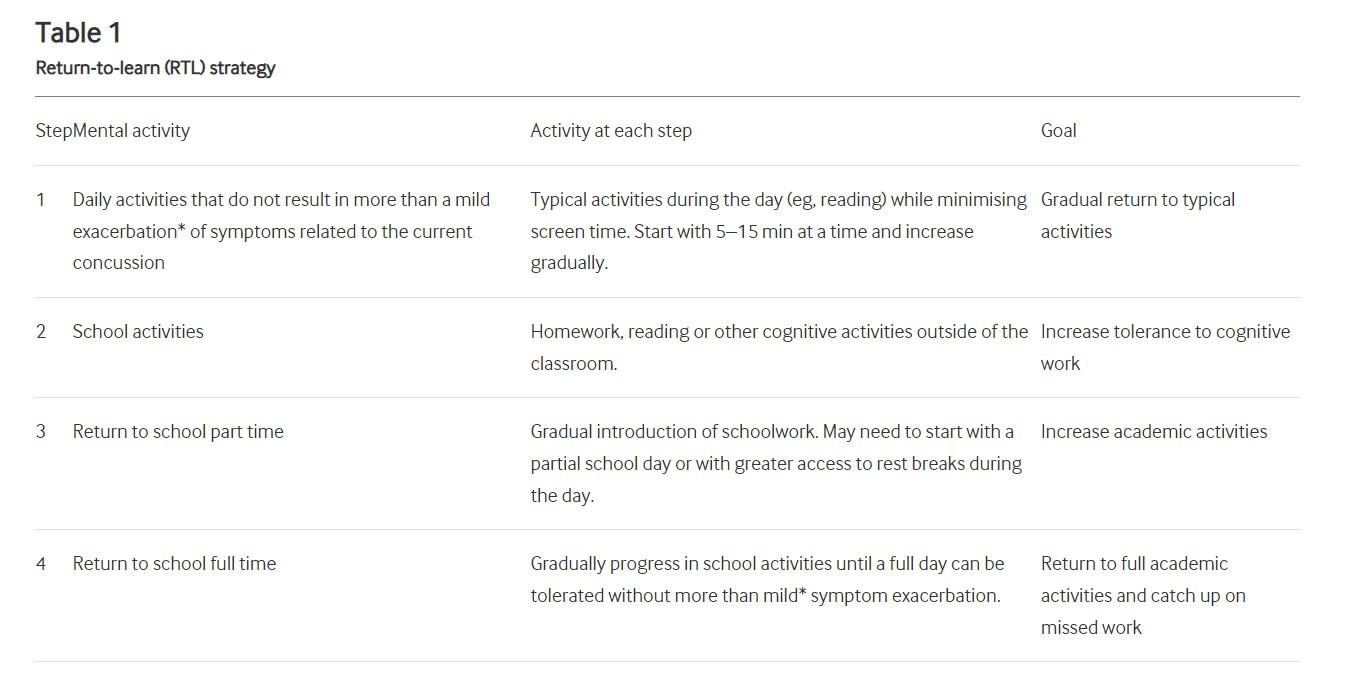 Sample wide chart used for layout
testing
Sample wide chart used for layout
testing
Reference B: Narrow
landscape image
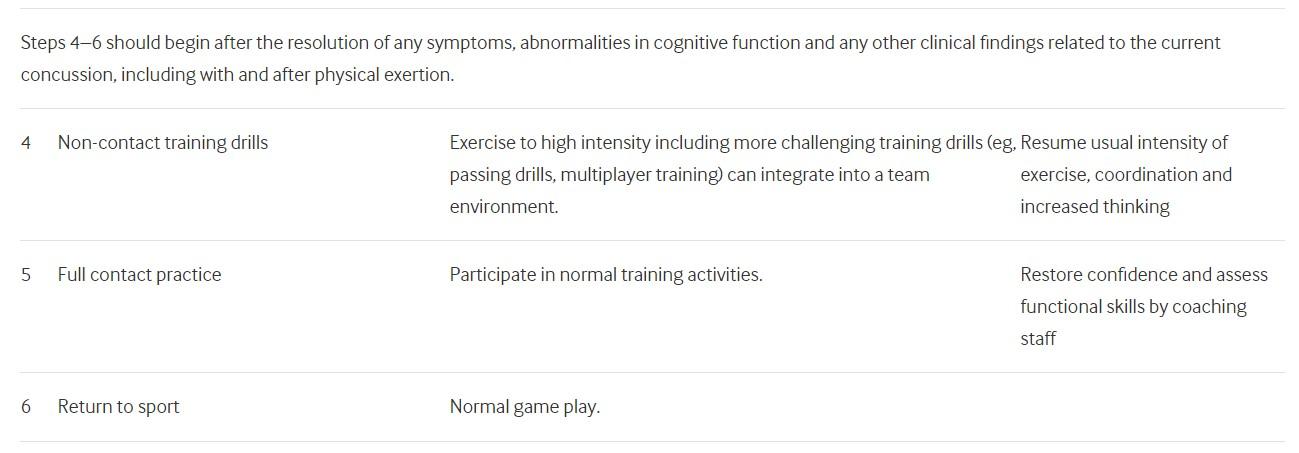 Sample narrow landscape
image
Sample narrow landscape
image
Reference C: Portrait
orientation
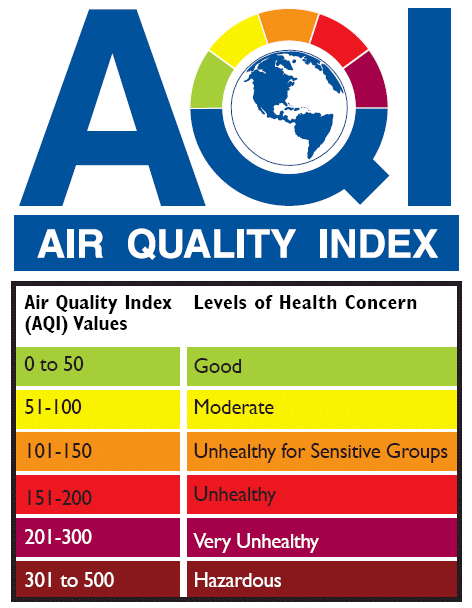 Sample portrait image
Reference
D: Wide-format chart, page-break candidate
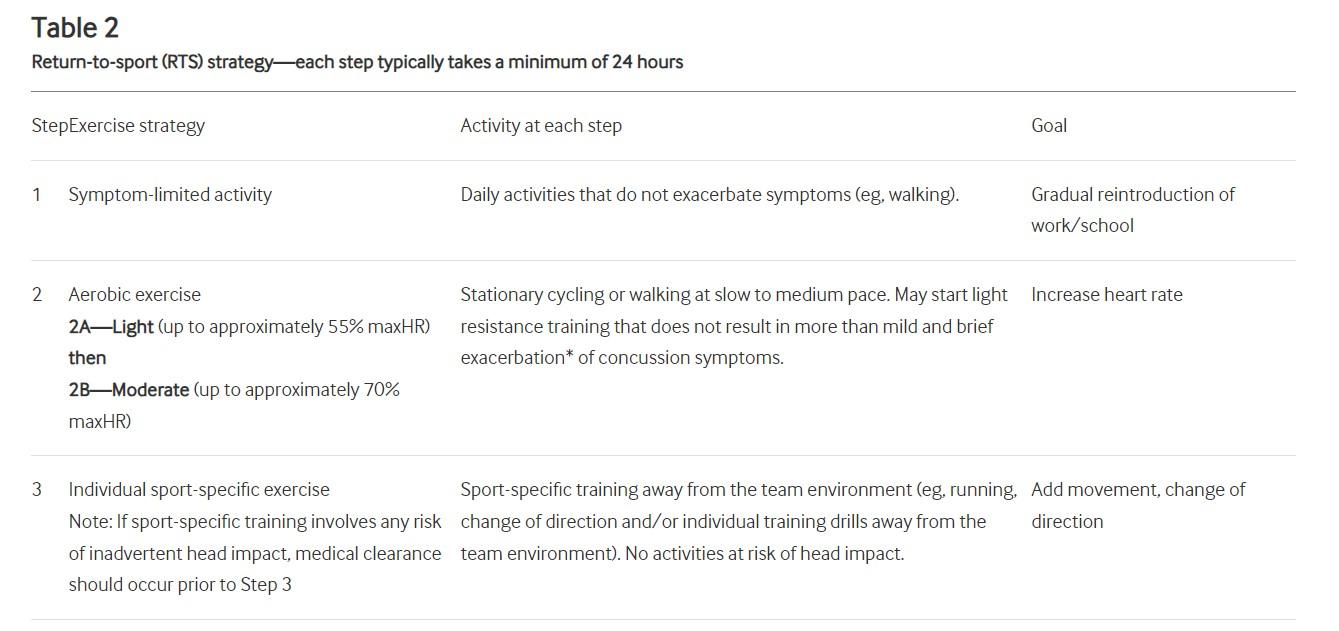 Sample wide figure for page-break
testing
Sample wide figure for page-break
testing
Your head coach, athletic trainer, or sport administrator will
give you the current version of any form you need. If you can’t
find a form, contact the compliance office.
